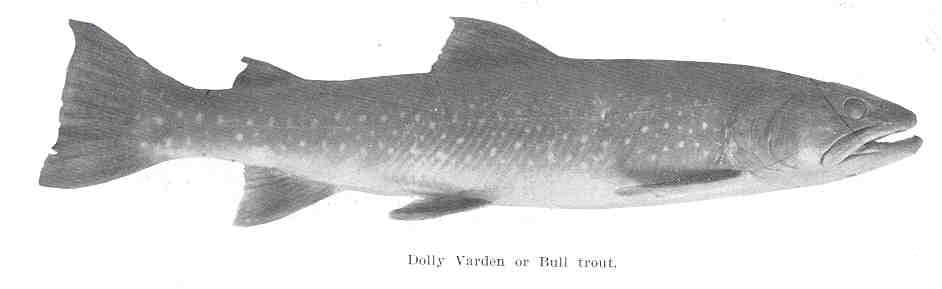
Bull Trout
Salvelinus confluentus
Overview
The bull trout is a large, predatory char native to the cold, pristine headwaters of the Pacific Northwest and northern Rocky Mountains. Despite its common name, the bull trout is technically a member of the char genus Salvelinus, closely related to brook trout, Dolly Varden, and Arctic char. Bull trout require the coldest and cleanest water of any salmonid in the lower 48 states, with water temperatures rarely exceeding 59 degrees Fahrenheit, making them a sensitive indicator species for watershed health. They are powerful, aggressive predators that can grow to impressive sizes, with fish over 20 pounds taken in some river systems. Bull trout exhibit diverse life history strategies including resident stream, fluvial, and adfluvial forms. Due to significant population declines from habitat degradation, dam construction, and competition with non-native species, bull trout are listed as Threatened under the Endangered Species Act, and many fisheries are catch-and-release only.
troutThreatened under the US Endangered Species Act; many populations have declined significantly from historical levels
Taxonomy
Order
Salmoniformes
Family
Salmonidae
Genus
Salvelinus
Species
S. confluentus
Habitat & Behavior
Cold, deep pools in headwater streams and large rivers; also deep, cold lakes connected to spawning tributaries with water temperatures below 59°F
Native Range: Pacific Northwest and northern Rocky Mountains, from northern Nevada and Oregon north through British Columbia and Alberta
Introduced Range: No significant introductions outside native range
Diet
Highly piscivorous as adults, feeding primarily on sculpin, whitefish, and juvenile salmonids; juveniles eat aquatic invertebrates and small crustaceans
Spawning
Bull trout spawn in the fall, typically September through November, migrating upstream to cold, clean headwater tributaries with specific gravel composition. Water temperature must remain below 48°F for successful egg incubation. Eggs incubate over winter and hatch in late winter or early spring.
Spawning Months
Jan
Feb
Mar
Apr
May
Jun
Jul
Aug
Sep
Oct
Nov
Dec
Spawning Temperature: 36-46°F
Conservation Status
Threatened under the US Endangered Species Act; many populations have declined significantly from historical levels
The Bull Trout is currently classified as Threatened under the US Endangered Species Act; many populations have declined significantly from historical levels. Responsible catch-and-release practices help protect populations for future generations of anglers.
Fly Fishing Tips
Bull trout are aggressive predators that respond well to large, articulated streamers stripped aggressively through deep pools and runs. Focus on the deepest, darkest water in the river, particularly around logjams and boulders. Many bull trout fisheries are catch-and-release only, so practice careful handling.
Tackle Recommendations
A 9-foot 6 or 7-weight rod with a sinking or sink-tip line for streamer work. Use 0X-2X tippet and stout leaders to handle large fish and heavy flies.
Distribution Map
Recommended Fly Patterns
Articulated Streamer #1/0-4
Woolly Bugger #2-6
Sculpzilla #2-4
Dolly Llama #2-6
Egg patterns #8-12
Zonker #2-6
Bunny Leech #2-6
Where to Find Bull Trout


Rivers with Bull Trout


Quick Facts
- Scientific Name
- Salvelinus confluentus
- Family
- trout
- Average Size
- 14-24 inches, 2-6 lbs
- Record Size
- 32 lbs (Lake Pend Oreille, Idaho, 1949)
- Lifespan
- 8-14 years, with migratory forms generally living longer than resident populations
- Water Temp Range
- 36-59°F (optimal 39-52°F)
- Native Range
- Pacific Northwest and northern Rocky Mountains, from northern Nevada and Oregon north through British Columbia and Alberta
- Conservation
- Threatened under the US Endangered Species Act; many populations have declined significantly from historical levels
Fun Facts
- Bull trout can live at elevations exceeding 7,000 feet in alpine headwater streams
- Migratory bull trout may travel over 100 miles between their summer feeding areas and spawning tributaries
- They were long confused with Dolly Varden char and were not formally recognized as a separate species until 1978
- Bull trout populations serve as a barometer for overall watershed health due to their exacting habitat requirements
Where to Find
Size Reference
Average Size
14-24 inches, 2-6 lbs
World Record
32 lbs (Lake Pend Oreille, Idaho, 1949)