Tarpon
Megalops atlanticus
Overview
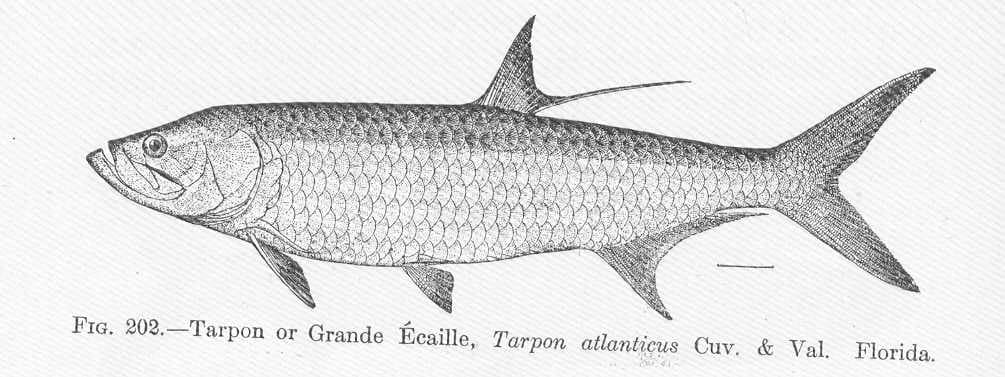
The tarpon is the undisputed heavyweight champion of saltwater fly fishing and arguably the most spectacular game fish in the world. Known as the silver king for its enormous, mirror-like scales and brilliant silver coloring, tarpon can exceed 200 pounds and are capable of explosive, repeated jumps that leave even experienced anglers in awe. Found throughout the tropical and subtropical Atlantic, from the coast of West Africa to the eastern seaboard of the Americas, tarpon congregate in remarkable numbers in the Florida Keys each spring during their annual migration. Hooking a tarpon on a fly rod is a violent, heart-stopping experience as the fish engulfs the fly, turns away, and erupts from the water in a shower of spray. The ensuing battle can last from minutes to hours and tests every aspect of an angler's skill, equipment, and physical endurance. Landing a tarpon over 100 pounds on a fly rod is one of the great achievements in sport fishing.
saltwaterVulnerable (IUCN); populations have declined in some areas due to overharvest, habitat loss, and bycatch; strictly catch-and-release in Florida waters
Taxonomy
Order
Elopiformes
Family
Megalopidae
Genus
Megalops
Species
M. atlanticus
Habitat & Behavior
Coastal waters including bays, passes, flats, channels, bridges, mangrove edges, and open ocean; tolerant of a wide range of salinities including freshwater
Native Range: Tropical and subtropical western Atlantic from Virginia south through the Caribbean, Gulf of Mexico, and along the coast of Brazil; also West Africa from Senegal to Angola
Introduced Range: Pacific coast of Panama and Costa Rica via the Panama Canal; scattered sightings in other non-native waters
Diet
Schooling baitfish (mullet, sardines, pinfish), crabs, shrimp, and other crustaceans; tarpon are opportunistic predators that feed at all levels of the water column
Spawning
Tarpon spawn offshore in deep water from May through August, releasing millions of eggs during moonlit nights. Larvae are transparent and ribbon-shaped, drifting in ocean currents for weeks before settling into coastal nursery habitat. Juvenile tarpon thrive in mangrove backwaters, canals, and even landlocked freshwater ponds.
Spawning Months
Jan
Feb
Mar
Apr
May
Jun
Jul
Aug
Sep
Oct
Nov
Dec
Spawning Temperature: 76-86°F (water temperature)
Conservation Status
Vulnerable (IUCN); populations have declined in some areas due to overharvest, habitat loss, and bycatch; strictly catch-and-release in Florida waters
The Tarpon is currently classified as Vulnerable (IUCN); populations have declined in some areas due to overharvest, habitat loss, and bycatch; strictly catch-and-release in Florida waters. Responsible catch-and-release practices help protect populations for future generations of anglers.
Fly Fishing Tips
Tarpon fishing demands a strip-strike rather than a trout-set when the fish eats the fly. Keep the rod tip low and use a strong, steady strip to set the hook in the tarpon's bony mouth. When the fish jumps, bow the rod toward it to create slack and prevent the hook from pulling free. Patience and stamina are essential for landing big fish.
Tackle Recommendations
A 12-weight rod is standard for adult tarpon, with a high-quality reel holding at least 250 yards of 30-40 lb backing. Use a 60-80 lb fluorocarbon shock tippet to withstand the tarpon's abrasive gill plates.
Distribution Map
Recommended Fly Patterns
Black Death #2/0-3/0
EP Baitfish #2/0-3/0
Tarpon Toad #2/0-3/0
Cockroach #1/0-3/0
Purple Demon #1/0-2/0
Apte Too #2/0-3/0
Laid-Up Tarpon Fly #1/0-2/0
Where to Find Tarpon


Rivers with Tarpon

Quick Facts
- Scientific Name
- Megalops atlanticus
- Family
- saltwater
- Average Size
- 40-70 inches, 40-100 lbs
- Record Size
- 286 lbs 9 oz (Lake Maracaibo, Venezuela, 2003)
- Lifespan
- 50-80 years, making them one of the longest-lived fish commonly targeted by fly anglers
- Water Temp Range
- 72-90°F (optimal 76-86°F)
- Native Range
- Tropical and subtropical western Atlantic from Virginia south through the Caribbean, Gulf of Mexico, and along the coast of Brazil; also West Africa from Senegal to Angola
- Conservation
- Vulnerable (IUCN); populations have declined in some areas due to overharvest, habitat loss, and bycatch; strictly catch-and-release in Florida waters
Fun Facts
- Tarpon have a primitive lung-like swim bladder that allows them to gulp air at the surface, enabling them to survive in oxygen-poor water
- A single tarpon scale can be larger than a silver dollar, and anglers traditionally keep a single scale as a trophy rather than harvesting the fish
- Tarpon have remained virtually unchanged for over 100 million years, making them living fossils that coexisted with dinosaurs
- The migration of giant tarpon through the Florida Keys each spring draws fly anglers from around the world and is one of the great spectacles in sport fishing
Size Reference
Average Size
40-70 inches, 40-100 lbs
World Record
286 lbs 9 oz (Lake Maracaibo, Venezuela, 2003)