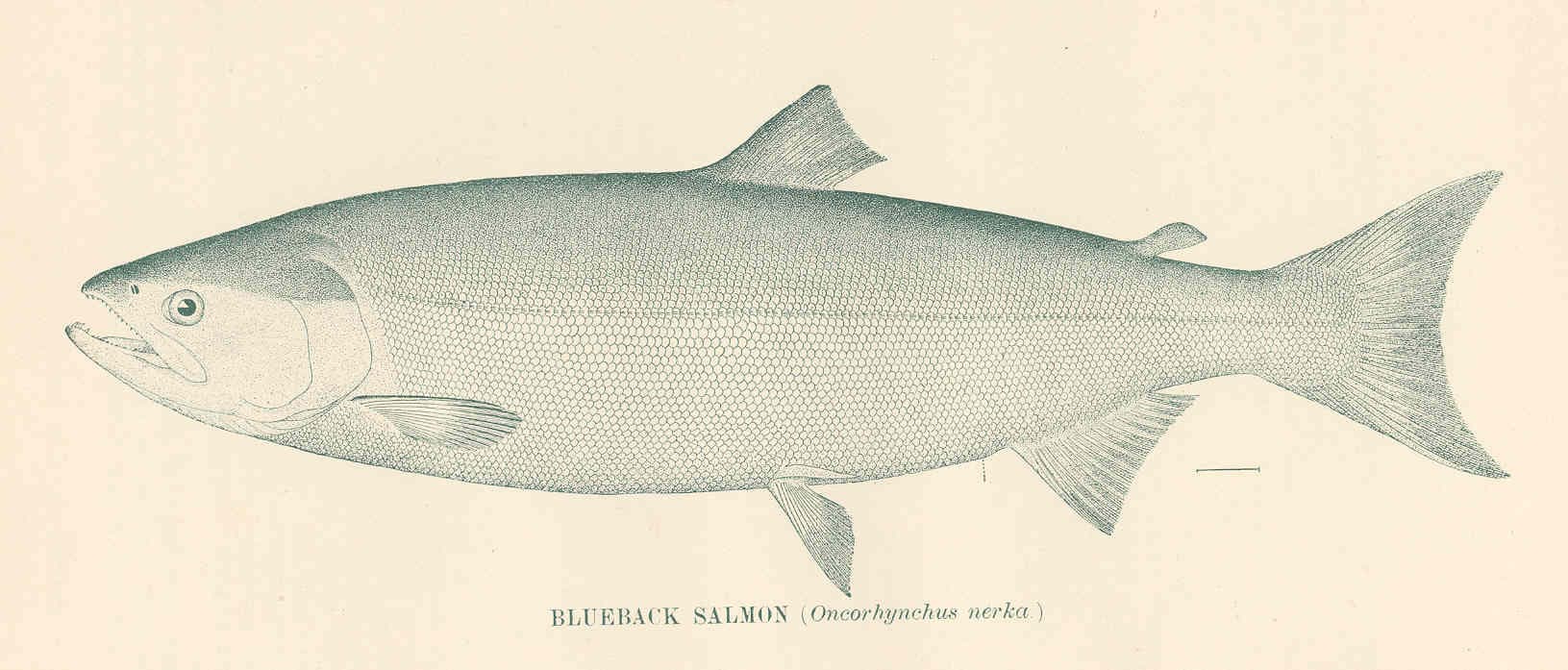
Sockeye Salmon
Oncorhynchus nerka
Overview
The sockeye salmon is the most commercially valuable Pacific salmon species and undergoes one of the most dramatic physical transformations in the natural world. In the ocean, sockeye are sleek, silver, blue-backed fish that feed primarily on zooplankton using specialized gill rakers. Upon entering freshwater for their spawning migration, they transform into a vivid crimson red with olive-green heads, giving them the alternate name red salmon. Sockeye are unique among Pacific salmon in that most populations require a lake in their life history, rearing as juveniles in freshwater lakes for one to three years before migrating to sea. Fly fishing for sockeye presents unique challenges, as they are plankton feeders that do not actively feed in freshwater. However, the sheer density of fish in rivers like Alaska's Kenai and the Bristol Bay drainages creates outstanding opportunities for anglers using small, bright flies drifted through concentrated schools.
salmonSnake River sockeye are listed as Endangered under the ESA; other lower 48 populations are threatened; Alaska populations are healthy with annual runs in the tens of millions
Taxonomy
Order
Salmoniformes
Family
Salmonidae
Genus
Oncorhynchus
Species
O. nerka
Habitat & Behavior
Open ocean during marine phase; lake systems and associated river corridors during freshwater rearing and spawning; concentrated in deep channels and pools during upstream migration
Native Range: North Pacific from the Columbia River north through Alaska, across to Kamchatka, Russia, and south to northern Japan
Introduced Range: Limited introductions in the Great Lakes and select New England waters; generally not widely stocked outside native range
Diet
Primarily zooplankton and small crustaceans in both freshwater and marine environments; one of the few salmonid species to rely heavily on plankton throughout its life cycle
Spawning
Sockeye salmon return to natal lake systems from June through September, spawning in tributaries and along lakeshore gravel beaches. Females deposit 2,000 to 4,500 eggs in gravel redds. The Bristol Bay sockeye run in Alaska is the largest in the world, with some years seeing over 60 million fish returning.
Spawning Months
Jan
Feb
Mar
Apr
May
Jun
Jul
Aug
Sep
Oct
Nov
Dec
Spawning Temperature: 42-50°F
Conservation Status
Snake River sockeye are listed as Endangered under the ESA; other lower 48 populations are threatened; Alaska populations are healthy with annual runs in the tens of millions
The Sockeye Salmon is currently classified as Snake River sockeye are listed as Endangered under the ESA; other lower 48 populations are threatened; Alaska populations are healthy with annual runs in the tens of millions. Responsible catch-and-release practices help protect populations for future generations of anglers.
Fly Fishing Tips
Sockeye salmon do not actively feed in freshwater, so fly selection is less about matching the hatch and more about triggering a reaction strike. Small, brightly colored flies drifted through dense schools on a dead drift can provoke strikes. Use a slow, steady retrieve or a rhythmic twitching motion to entice takes.
Tackle Recommendations
A 9-foot 7 or 8-weight rod handles most sockeye fishing situations well. Use a floating line with a long leader and 8-12 lb fluorocarbon tippet to present small flies naturally.
Distribution Map
Recommended Fly Patterns
Sockeye Candy #6-10
Comet #6-8
Bead Head Nymph #8-12
Glo Bug #8-12
Bunny Bug #6-8
Flash Fly #6-8
Egg Pattern #8-12
Where to Find Sockeye Salmon


Rivers with Sockeye Salmon


Quick Facts
- Scientific Name
- Oncorhynchus nerka
- Family
- salmon
- Average Size
- 20-26 inches, 5-8 lbs
- Record Size
- 15 lbs 3 oz (Kenai River, Alaska, 1974)
- Lifespan
- 4-5 years on average, with 1-3 years in freshwater and 1-3 years in the ocean
- Water Temp Range
- 42-58°F (optimal 46-54°F)
- Native Range
- North Pacific from the Columbia River north through Alaska, across to Kamchatka, Russia, and south to northern Japan
- Conservation
- Snake River sockeye are listed as Endangered under the ESA; other lower 48 populations are threatened; Alaska populations are healthy with annual runs in the tens of millions
Fun Facts
- The Bristol Bay sockeye run in Alaska is the largest salmon run on Earth, with returns sometimes exceeding 60 million fish
- Sockeye salmon can detect magnetic fields and use the Earth's magnetism to navigate during ocean migration
- The landlocked form of sockeye salmon is called kokanee and is popular with anglers in mountain lakes across the western US
- Sockeye salmon turn from silver to a brilliant crimson red as they enter spawning condition, one of the most dramatic color changes in the animal kingdom
Where to Find
Size Reference
Average Size
20-26 inches, 5-8 lbs
World Record
15 lbs 3 oz (Kenai River, Alaska, 1974)