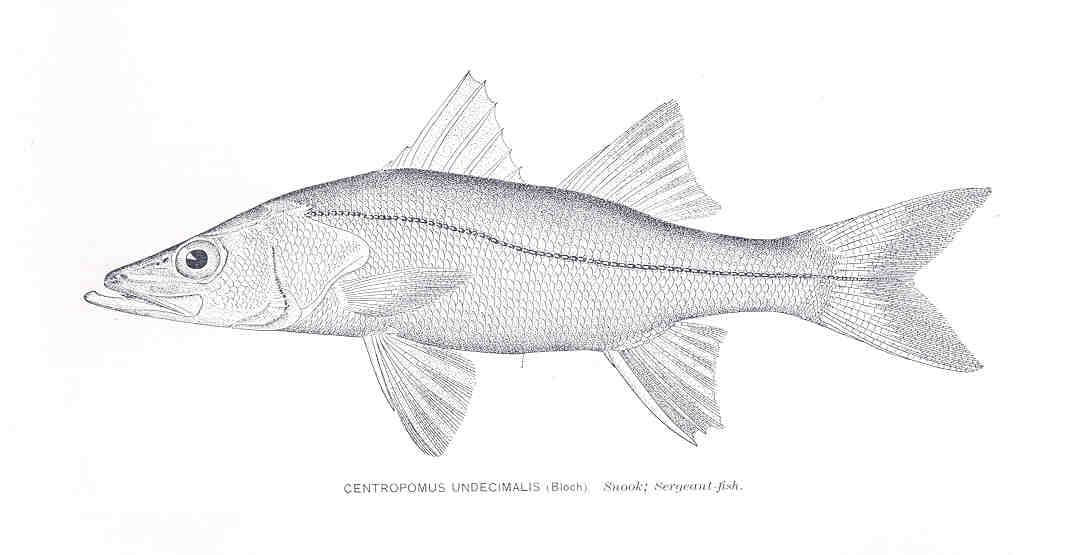
Snook
Centropomus undecimalis
Overview
The snook is the quintessential inshore game fish of tropical and subtropical Florida and the Caribbean, prized for its explosive strikes, powerful fights, and challenging behavior. Identified by a prominent black lateral line running from gill plate to tail, snook are ambush predators that lurk around mangrove roots, dock pilings, bridge shadows, and beach structure, using shade and current to ambush passing baitfish and shrimp. Snook are highly sensitive to cold water and are restricted to the warmest parts of their range during winter months, with mass die-offs occurring during unusual cold snaps in Florida. Fly fishing for snook combines the sight fishing excitement of flats species with the structure-oriented challenge of bass fishing, as anglers must deliver accurate casts tight to cover and then fight powerful fish away from line-cutting structure. Night fishing under lighted docks and bridges with streamers is a particularly exciting pursuit.
saltwaterNot globally assessed by IUCN; strictly regulated in Florida with seasonal closures, slot limits, and catch-and-release-only periods following the 2010 cold kill event
Taxonomy
Order
Carangiformes
Family
Centropomidae
Genus
Centropomus
Species
C. undecimalis
Habitat & Behavior
Mangrove shorelines, dock pilings, bridge shadows, inlet channels, beach troughs, and tidal creeks; requires water temperatures above 60°F and tolerates both fresh and saltwater
Native Range: Western Atlantic from central Florida south through the Caribbean, Gulf of Mexico, and along the coast of Brazil to Rio de Janeiro
Introduced Range: No significant introductions; natural range restricted by cold temperature intolerance
Diet
Primarily fish (mullet, pilchard, pinfish, greenbacks) and shrimp; ambush predator that uses structure and current to trap prey
Spawning
Snook spawn from May through September in passes, inlets, and near barrier island beaches during the new and full moon. They are protandric hermaphrodites, meaning individuals begin life as males and some transition to females as they grow larger. This life history strategy means that large females are particularly valuable to the population.
Spawning Months
Jan
Feb
Mar
Apr
May
Jun
Jul
Aug
Sep
Oct
Nov
Dec
Spawning Temperature: 76-86°F (water temperature)
Conservation Status
Not globally assessed by IUCN; strictly regulated in Florida with seasonal closures, slot limits, and catch-and-release-only periods following the 2010 cold kill event
The Snook is currently classified as Not globally assessed by IUCN; strictly regulated in Florida with seasonal closures, slot limits, and catch-and-release-only periods following the 2010 cold kill event. Responsible catch-and-release practices help protect populations for future generations of anglers.
Fly Fishing Tips
Accuracy is paramount when fishing for snook around structure. Cast tight to mangrove roots, dock pilings, and bridge shadows and begin stripping immediately with sharp, darting retrieves. At night, target lighted docks and bridges where snook ambush baitfish attracted to the illumination. During the beach spawn, wade the sandy troughs at dawn for outstanding sight fishing.
Tackle Recommendations
A 9-foot 8 or 9-weight rod with a fast action for casting into wind and pulling fish from structure. Use 30-40 lb fluorocarbon shock tippet to resist the snook's abrasive gill plates.
Distribution Map
Recommended Fly Patterns
Deceiver #1/0-3/0
EP Baitfish #1/0-3/0
Gurgler #1/0-2/0
Clouser Minnow #1/0-2/0
Seaducer #1/0-2/0
Puglisi Shrimp #2-4
Hollow Fleye #2/0-3/0
Where to Find Snook


Rivers with Snook

Quick Facts
- Scientific Name
- Centropomus undecimalis
- Family
- saltwater
- Average Size
- 20-32 inches, 5-12 lbs
- Record Size
- 53 lbs 10 oz (Parismina, Costa Rica, 2014)
- Lifespan
- 15-21 years, with females living longer and growing larger than males
- Water Temp Range
- 60-90°F (optimal 72-86°F; lethal below 55°F for extended periods)
- Native Range
- Western Atlantic from central Florida south through the Caribbean, Gulf of Mexico, and along the coast of Brazil to Rio de Janeiro
- Conservation
- Not globally assessed by IUCN; strictly regulated in Florida with seasonal closures, slot limits, and catch-and-release-only periods following the 2010 cold kill event
Fun Facts
- Snook are protandric hermaphrodites, starting life as males and potentially transitioning to females as they grow, usually around age 3-5
- Their distinctive black lateral line is so prominent that snook are sometimes called linesiders or sergeant fish
- A severe cold snap in January 2010 killed millions of snook in Florida, leading to a complete closure of the fishery for several years
- Snook can tolerate entirely fresh water and are regularly found far upstream in coastal rivers and canals
Where to Find
Size Reference
Average Size
20-32 inches, 5-12 lbs
World Record
53 lbs 10 oz (Parismina, Costa Rica, 2014)