Roosterfish
Nematistius pectoralis
Overview
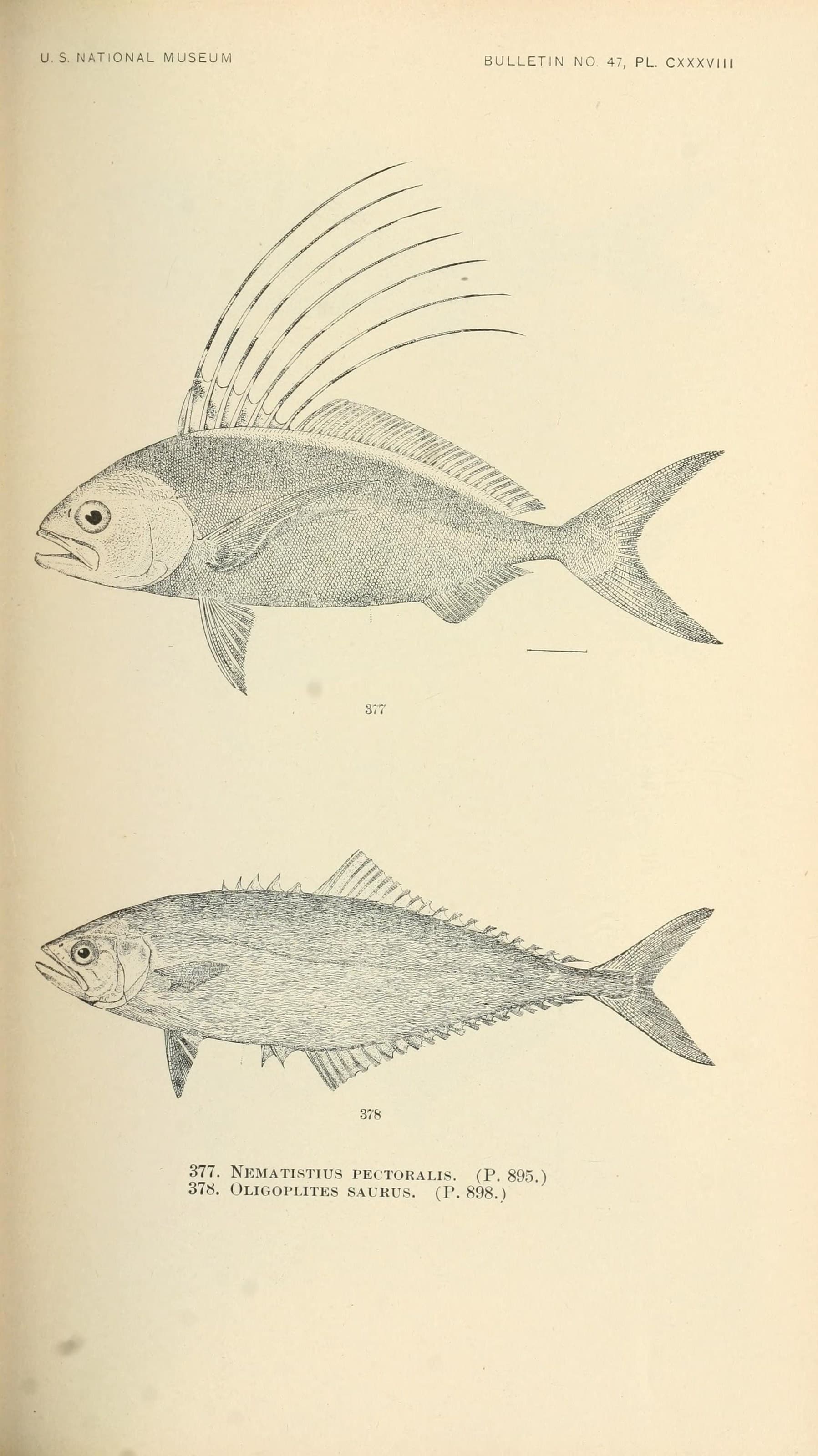
The roosterfish is one of the most visually spectacular game fish in the world, instantly recognizable by its extraordinary dorsal fin composed of seven elongated spines that resemble a rooster's comb. Found exclusively along the Pacific coast of the Americas from Baja California to Peru, roosterfish are powerful inshore predators that patrol sandy beaches, rocky points, and river mouths in the warm waters of the eastern Pacific. Sight fishing for roosterfish from the beach is a unique and thrilling experience, as anglers spot the distinctive dorsal comb cutting through the surface of the surf zone before making a carefully timed cast. Roosterfish are explosive fighters that make powerful runs along the beach, testing drag systems and line capacity. The combination of their striking appearance, challenging behavior, and the dramatic coastal settings where they are found makes roosterfish one of the most coveted species among traveling fly anglers.
saltwaterData Deficient (IUCN); not commercially targeted in most of its range but faces localized pressure from artisanal fishing; catch-and-release increasingly practiced by sport fishers
Taxonomy
Order
Carangiformes
Family
Nematistiidae
Genus
Nematistius
Species
N. pectoralis
Habitat & Behavior
Sandy beaches, rocky shorelines, river mouths, and reef edges in warm eastern Pacific waters; commonly found in the surf zone in water 2-15 feet deep
Native Range: Eastern Pacific coast from Baja California Sur, Mexico, south through Central America to northern Peru, including offshore islands
Introduced Range: No introductions; endemic to the eastern Pacific
Diet
Small fish (sardines, mullet, needlefish), crabs, and squid; roosterfish are aggressive predators that often hunt cooperatively in small groups, driving baitfish into shallow water
Spawning
Roosterfish spawning behavior is poorly documented, but they are believed to spawn in offshore waters from June through November. Larvae are pelagic and settle into coastal nursery areas as juveniles. Research on roosterfish reproductive biology is ongoing, and much remains unknown.
Spawning Months
Jan
Feb
Mar
Apr
May
Jun
Jul
Aug
Sep
Oct
Nov
Dec
Spawning Temperature: 76-84°F (water temperature)
Conservation Status
Data Deficient (IUCN); not commercially targeted in most of its range but faces localized pressure from artisanal fishing; catch-and-release increasingly practiced by sport fishers
The Roosterfish is currently classified as Data Deficient (IUCN); not commercially targeted in most of its range but faces localized pressure from artisanal fishing; catch-and-release increasingly practiced by sport fishers. Responsible catch-and-release practices help protect populations for future generations of anglers.
Fly Fishing Tips
Beach fishing for roosterfish requires scanning the surf zone for the distinctive dorsal comb or nervous baitfish activity. Cast ahead of cruising fish with a fast-sinking baitfish pattern and strip aggressively. Timing the cast between waves is critical, and anglers should be prepared to move quickly along the beach to follow pods of hunting roosterfish.
Tackle Recommendations
A 10 or 11-weight rod with a stripping basket for surf casting. Use an intermediate or fast-sinking line and 20-30 lb fluorocarbon leader to handle powerful runs along the beach.
Distribution Map
Recommended Fly Patterns
EP Baitfish #2/0-4/0
Deceiver #2/0-4/0
Clouser Minnow #1/0-3/0
Popper #2/0-4/0
Crease Fly #2/0-3/0
Brush Fly #2/0-4/0
Puglisi Sardine #1/0-3/0
Where to Find Roosterfish


Rivers with Roosterfish

Quick Facts
- Scientific Name
- Nematistius pectoralis
- Family
- saltwater
- Average Size
- 24-36 inches, 10-30 lbs
- Record Size
- 114 lbs (Baja California, Mexico, 1960)
- Lifespan
- Estimated 12-20 years based on limited age studies
- Water Temp Range
- 68-86°F (optimal 74-82°F)
- Native Range
- Eastern Pacific coast from Baja California Sur, Mexico, south through Central America to northern Peru, including offshore islands
- Conservation
- Data Deficient (IUCN); not commercially targeted in most of its range but faces localized pressure from artisanal fishing; catch-and-release increasingly practiced by sport fishers
Fun Facts
- The roosterfish is the only living member of its family, Nematistiidae, making it a taxonomically unique species with no close relatives
- Their seven elongated dorsal spines can be raised and lowered at will and are used for display and communication with other roosterfish
- Roosterfish are one of the few game fish species where sight fishing from the beach is a primary technique
- Despite their impressive size and fighting ability, roosterfish have relatively small mouths for their body size, requiring careful fly selection
Where to Find
Size Reference
Average Size
24-36 inches, 10-30 lbs
World Record
114 lbs (Baja California, Mexico, 1960)