Rainbow Trout
Oncorhynchus mykiss
Overview
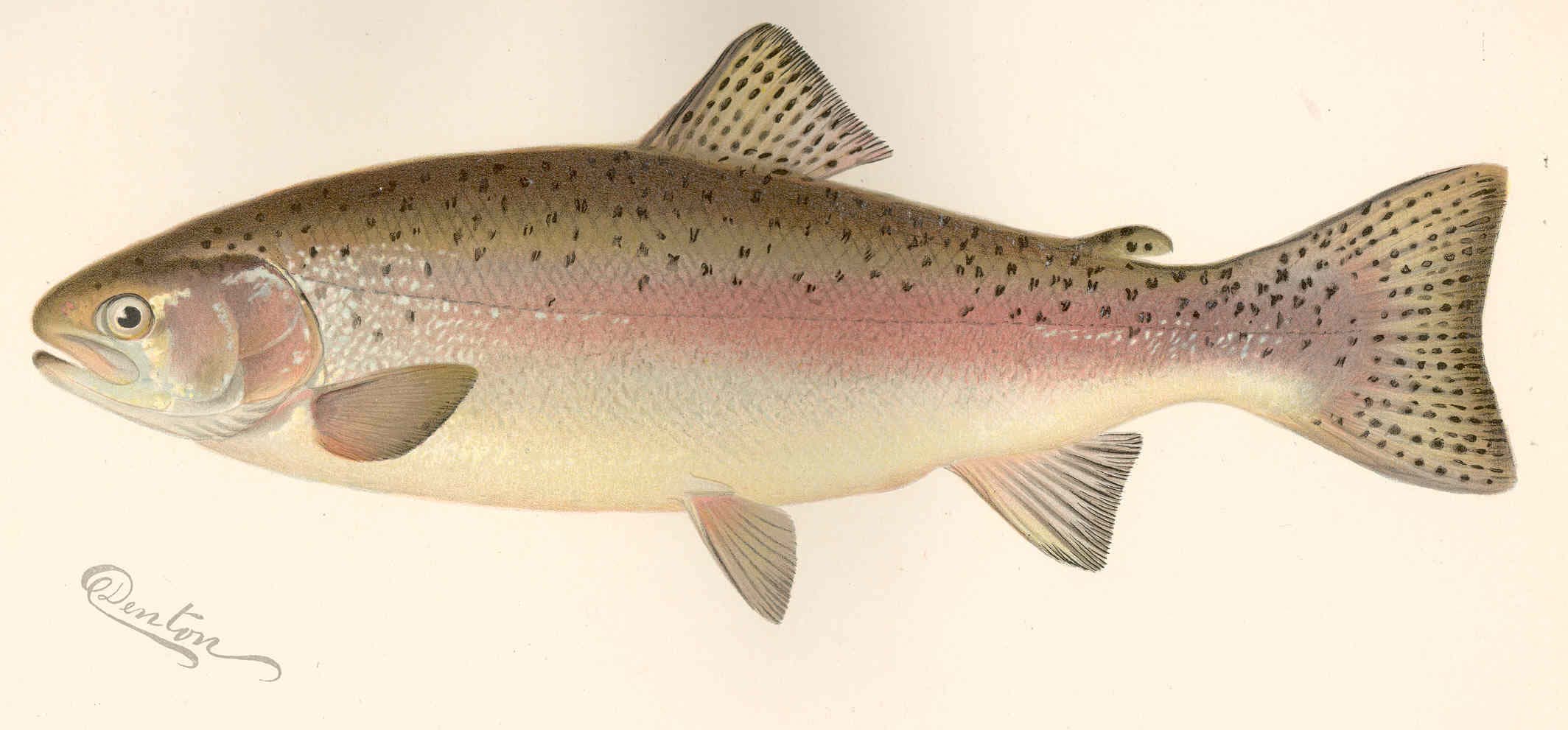
The rainbow trout is one of the most widely distributed and sought-after game fish in the world. Named for the distinctive pink-to-red lateral band that runs along its side, the rainbow is renowned for its acrobatic fighting ability and willingness to take a fly. Native to the cold-water tributaries of the Pacific Ocean in Asia and North America, rainbow trout have been introduced to suitable waters on every continent except Antarctica. They thrive in clean, cold, well-oxygenated streams, rivers, and lakes, with an ideal temperature range of 50 to 60 degrees Fahrenheit. Rainbows are opportunistic feeders, readily taking nymphs, dry flies, and streamers, making them a favorite target for fly anglers of all experience levels. Their adaptability and willingness to feed throughout the water column mean that nearly every fly fishing technique can be employed when targeting them.
troutLeast Concern (IUCN); some native subspecies are Threatened or Endangered under the ESA
Taxonomy
Order
Salmoniformes
Family
Salmonidae
Genus
Oncorhynchus
Species
O. mykiss
Habitat & Behavior
Cold, clean rivers and streams with gravel bottoms; also lakes, tailwaters, and spring creeks with water temperatures between 50-65°F
Native Range: Pacific drainages of North America and Asia, from Mexico to Alaska and across to Kamchatka
Introduced Range: Every continent except Antarctica, including Europe, South America, Africa, Oceania, and additional Asian drainages
Diet
Aquatic insects (mayflies, caddisflies, stoneflies, midges), terrestrial insects, crustaceans, small fish, and fish eggs
Spawning
Rainbow trout are spring spawners, typically depositing eggs in gravel redds in tributary streams from February through June depending on latitude. Females select well-oxygenated riffle areas with clean gravel substrate. Eggs incubate for 3-4 weeks before hatching.
Spawning Months
Jan
Feb
Mar
Apr
May
Jun
Jul
Aug
Sep
Oct
Nov
Dec
Spawning Temperature: 42-52°F
Conservation Status
Least Concern (IUCN); some native subspecies are Threatened or Endangered under the ESA
The Rainbow Trout is currently classified as Least Concern (IUCN); some native subspecies are Threatened or Endangered under the ESA. Responsible catch-and-release practices help protect populations for future generations of anglers.
Fly Fishing Tips
Rainbow trout are active feeders throughout the day and respond well to both nymphing and dry fly presentations. Focus on seams, riffles, and tailouts where food concentrates. During heavy hatches, match the hatch closely with properly sized imitations.
Tackle Recommendations
A 9-foot 5-weight rod is the standard choice for most rainbow trout fishing. Use 4X-6X tippet depending on fly size and water clarity.
Distribution Map
Recommended Fly Patterns
Parachute Adams #14-18
Elk Hair Caddis #14-16
Pheasant Tail Nymph #14-18
Rainbow Warrior #16-20
Woolly Bugger #6-10
Blue-winged Olive #16-20
San Juan Worm #10-14
Where to Find Rainbow Trout


Rivers with Rainbow Trout


Quick Facts
- Scientific Name
- Oncorhynchus mykiss
- Family
- trout
- Average Size
- 12-20 inches, 1-5 lbs
- Record Size
- 48 lbs (Lake Diefenbaker, Saskatchewan, 2009)
- Lifespan
- 4-8 years in the wild, up to 11 years
- Water Temp Range
- 44-67°F (optimal 50-60°F)
- Native Range
- Pacific drainages of North America and Asia, from Mexico to Alaska and across to Kamchatka
- Conservation
- Least Concern (IUCN); some native subspecies are Threatened or Endangered under the ESA
Fun Facts
- Rainbow trout can detect colors into the ultraviolet spectrum, which influences their response to fluorescent fly materials
- Sea-run rainbow trout are called steelhead and can grow to over 40 inches
- Rainbows have been known to jump up to 3 feet out of the water when hooked
- They were first described scientifically by German naturalist Johann Julius Walbaum in 1792
Where to Find
Size Reference
Average Size
12-20 inches, 1-5 lbs
World Record
48 lbs (Lake Diefenbaker, Saskatchewan, 2009)