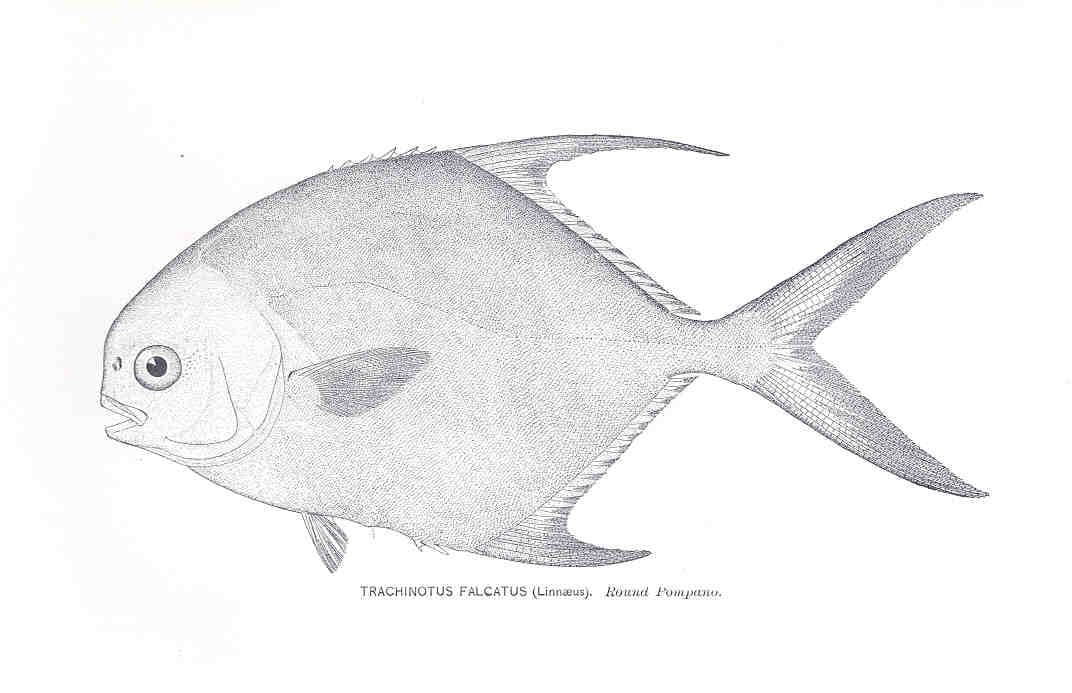
Permit
Trachinotus falcatus
Overview
The permit is widely considered the most difficult fish to catch on a fly in the world, and landing one on the flats is a defining achievement in any fly angler's career. Found on the same tropical flats as bonefish and tarpon, the permit is a large, powerful member of the jack family distinguished by its deep, compressed body, sickle-shaped tail, and dark dorsal and anal fins. Permit feed primarily on crabs and other crustaceans found on sandy and rocky flats, and their wariness and selectivity are legendary among fly anglers. A typical permit fishing day might involve dozens of shots at fish that refuse, spook, or simply ignore the fly entirely. But when everything comes together and a permit tips down on your crab pattern, the ensuing fight is a powerful, drag-testing battle that cements the permit's reputation as the ultimate flats challenge.
saltwaterLeast Concern (IUCN); populations are healthy throughout most of their range, but increasingly managed through catch-and-release regulations in key fisheries
Taxonomy
Order
Carangiformes
Family
Carangidae
Genus
Trachinotus
Species
T. falcatus
Habitat & Behavior
Shallow saltwater flats with sand and rocky substrate; reef edges, channels, and wrecks; feeds over turtle grass flats and sandy depressions in water 1-10 feet deep
Native Range: Western Atlantic from Massachusetts south through the Caribbean, Gulf of Mexico, and along the coast of Brazil; also found in Bermuda
Introduced Range: No introductions; entirely natural distribution in the western Atlantic and Caribbean basin
Diet
Primarily crabs (blue crabs, spider crabs, mole crabs), shrimp, sea urchins, small clams, and occasionally small fish; uses powerful jaws and pharyngeal teeth to crush hard-shelled prey
Spawning
Permit spawn offshore from April through September, with peak activity during full moon periods. They form large aggregations near reef edges and channel mouths for spawning. Larvae are pelagic and settle onto coastal flats as juveniles, where they grow rapidly feeding on small crustaceans.
Spawning Months
Jan
Feb
Mar
Apr
May
Jun
Jul
Aug
Sep
Oct
Nov
Dec
Spawning Temperature: 76-84°F (water temperature)
Conservation Status
Least Concern (IUCN); populations are healthy throughout most of their range, but increasingly managed through catch-and-release regulations in key fisheries
The Permit is currently classified as Least Concern (IUCN); populations are healthy throughout most of their range, but increasingly managed through catch-and-release regulations in key fisheries. Responsible catch-and-release practices help protect populations for future generations of anglers.
Fly Fishing Tips
Permit fishing is a game of patience and precision. Use weighted crab patterns that land softly and sink quickly to the bottom. Cast well ahead of a cruising permit and let the fly sit motionless on the bottom until the fish approaches. Movement should be minimal and slow, mimicking a crab trying to hide rather than flee.
Tackle Recommendations
A 9-foot 9 or 10-weight rod with a powerful butt section for fighting large fish in current. Use 12-16 lb fluorocarbon tippet and a reel with a smooth drag and at least 200 yards of backing.
Distribution Map
Recommended Fly Patterns
Merkin Crab #2-6
Permit Crab #2-4
Raghead Crab #2-4
Flexo Crab #2-4
EP Crab #2-4
Spawning Shrimp #4-6
Wool Crab #2-4
Where to Find Permit


Rivers with Permit

Quick Facts
- Scientific Name
- Trachinotus falcatus
- Family
- saltwater
- Average Size
- 20-30 inches, 10-25 lbs
- Record Size
- 60 lbs (Fort Lauderdale, Florida, 1997)
- Lifespan
- 20-30 years, making them one of the longest-lived flats species
- Water Temp Range
- 70-88°F (optimal 76-84°F)
- Native Range
- Western Atlantic from Massachusetts south through the Caribbean, Gulf of Mexico, and along the coast of Brazil; also found in Bermuda
- Conservation
- Least Concern (IUCN); populations are healthy throughout most of their range, but increasingly managed through catch-and-release regulations in key fisheries
Fun Facts
- Permit have been called the holy grail of flats fishing, and many experienced anglers go years between catches
- The Grand Slam of saltwater fly fishing (bonefish, permit, and tarpon in one day) is one of the most coveted achievements in the sport
- Permit can detect the electromagnetic fields generated by crabs and shrimp buried in the sand
- Their deep, compressed body shape generates immense power that allows them to make sustained, drag-testing runs on the flats
Size Reference
Average Size
20-30 inches, 10-25 lbs
World Record
60 lbs (Fort Lauderdale, Florida, 1997)