Peacock Bass
Cichla temensis
Overview
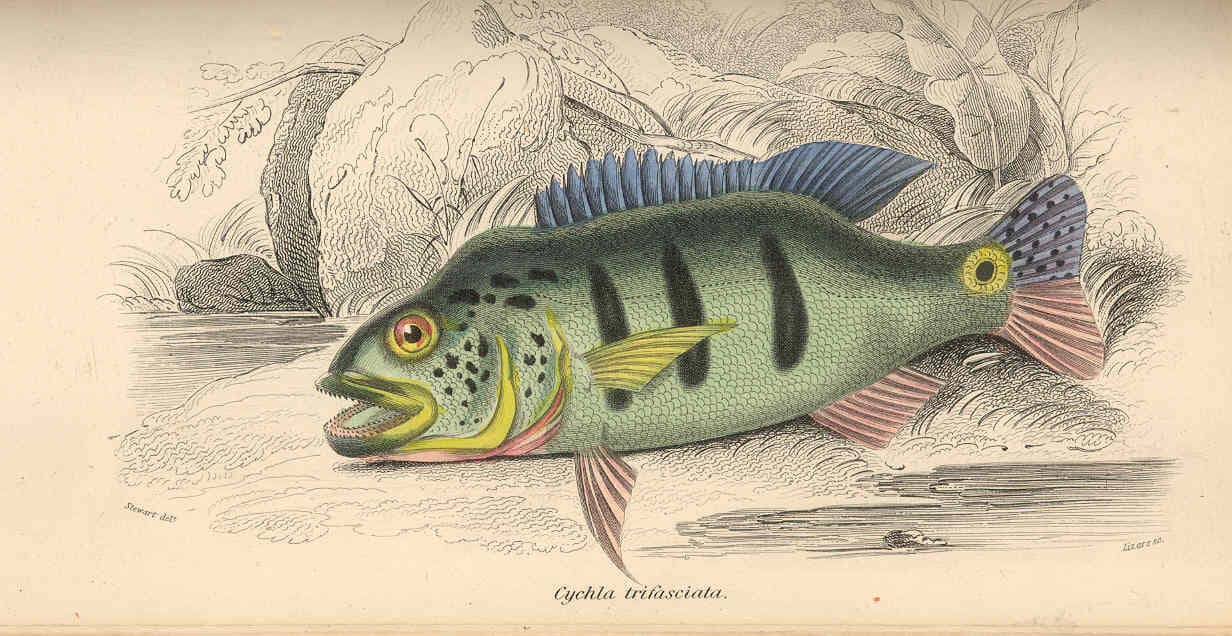
The peacock bass is the most aggressive freshwater game fish in the tropics, delivering explosive topwater strikes and brutal, drag-testing fights that have made it a bucket-list species for traveling fly anglers. Native to the Amazon and Orinoco river basins of South America, peacock bass are actually members of the cichlid family rather than true bass, but their predatory behavior and powerful build have earned them the bass comparison. The speckled peacock bass is the largest of approximately 15 recognized species, with fish exceeding 25 pounds regularly caught in remote Amazonian blackwater rivers. Their namesake eyespot on the tail, brilliant green and gold coloring, and three distinctive vertical bars make them among the most visually striking freshwater fish in the world. Fly fishing for peacock bass is a tropical adventure that takes anglers deep into the Amazon basin aboard floating motherships.
saltwaterLeast Concern (IUCN) in native range; considered invasive in some introduced habitats including South Florida and Hawaii
Taxonomy
Order
Cichliformes
Family
Cichlidae
Genus
Cichla
Species
C. temensis
Habitat & Behavior
Blackwater and clearwater rivers, lagoons, and flooded forest in the Amazon basin; also lakes, canals, and warm-water rivers where introduced
Native Range: Amazon, Orinoco, and other river basins in tropical South America, from Venezuela and Colombia south through Brazil and Peru
Introduced Range: South Florida canals, Hawaii, Puerto Rico, Panama Canal Zone, and various tropical regions where they have been stocked as game fish
Diet
Primarily fish, including piranha, characins, and other cichlids; also shrimp, crabs, and large aquatic insects; extremely aggressive predator that will attack prey nearly its own size
Spawning
Peacock bass spawn year-round in tropical waters, with peak activity during the rainy and early dry seasons. Both parents guard the nest and defend the fry aggressively for several weeks after hatching. Nest-guarding adults are particularly territorial and will attack flies and lures that approach their fry.
Spawning Months
Jan
Feb
Mar
Apr
May
Jun
Jul
Aug
Sep
Oct
Nov
Dec
Spawning Temperature: 78-86°F (water temperature)
Conservation Status
Least Concern (IUCN) in native range; considered invasive in some introduced habitats including South Florida and Hawaii
The Peacock Bass is currently classified as Least Concern (IUCN) in native range; considered invasive in some introduced habitats including South Florida and Hawaii. Responsible catch-and-release practices help protect populations for future generations of anglers.
Fly Fishing Tips
Peacock bass are aggressive topwater predators that respond best to large poppers and divers fished with loud, splashy retrieves. Work structure such as fallen trees, rock outcrops, and flooded vegetation systematically. The strikes are often violent and may require a strip-strike followed by keeping heavy pressure on the fish to prevent it from reaching snag-filled cover.
Tackle Recommendations
A 9-foot 8 to 10-weight rod depending on species size. Use a weight-forward floating line with a short, stout 30-40 lb leader. Wire tippet is not necessary, but heavy fluorocarbon is recommended.
Distribution Map
Recommended Fly Patterns
Large Popper #2/0-4/0
Dahlberg Diver #1/0-3/0
Deceiver #1/0-3/0
Clouser Minnow #1/0-2/0
Gurgler #1/0-3/0
EP Baitfish #1/0-3/0
Game Changer #1/0-3/0
Where to Find Peacock Bass


Rivers with Peacock Bass

Quick Facts
- Scientific Name
- Cichla temensis
- Family
- saltwater
- Average Size
- 16-24 inches, 4-10 lbs
- Record Size
- 29 lbs (Rio Negro, Brazil, 2010)
- Lifespan
- 8-12 years in the wild, with the largest speckled peacock bass estimated at 15+ years
- Water Temp Range
- 74-90°F (optimal 78-86°F; cannot survive water below 60°F)
- Native Range
- Amazon, Orinoco, and other river basins in tropical South America, from Venezuela and Colombia south through Brazil and Peru
- Conservation
- Least Concern (IUCN) in native range; considered invasive in some introduced habitats including South Florida and Hawaii
Fun Facts
- Despite being called bass, peacock bass are actually cichlids and are more closely related to tilapia and angelfish than to largemouth bass
- Peacock bass were intentionally introduced to South Florida canals in 1984 to control invasive spotted tilapia populations
- Both parents guard the nest and young fry, and adult peacock bass have been observed attacking caiman that approach their offspring
- The eyespot on the tail, which gives them the peacock name, is believed to confuse predators about which end is the head
Where to Find
Size Reference
Average Size
16-24 inches, 4-10 lbs
World Record
29 lbs (Rio Negro, Brazil, 2010)