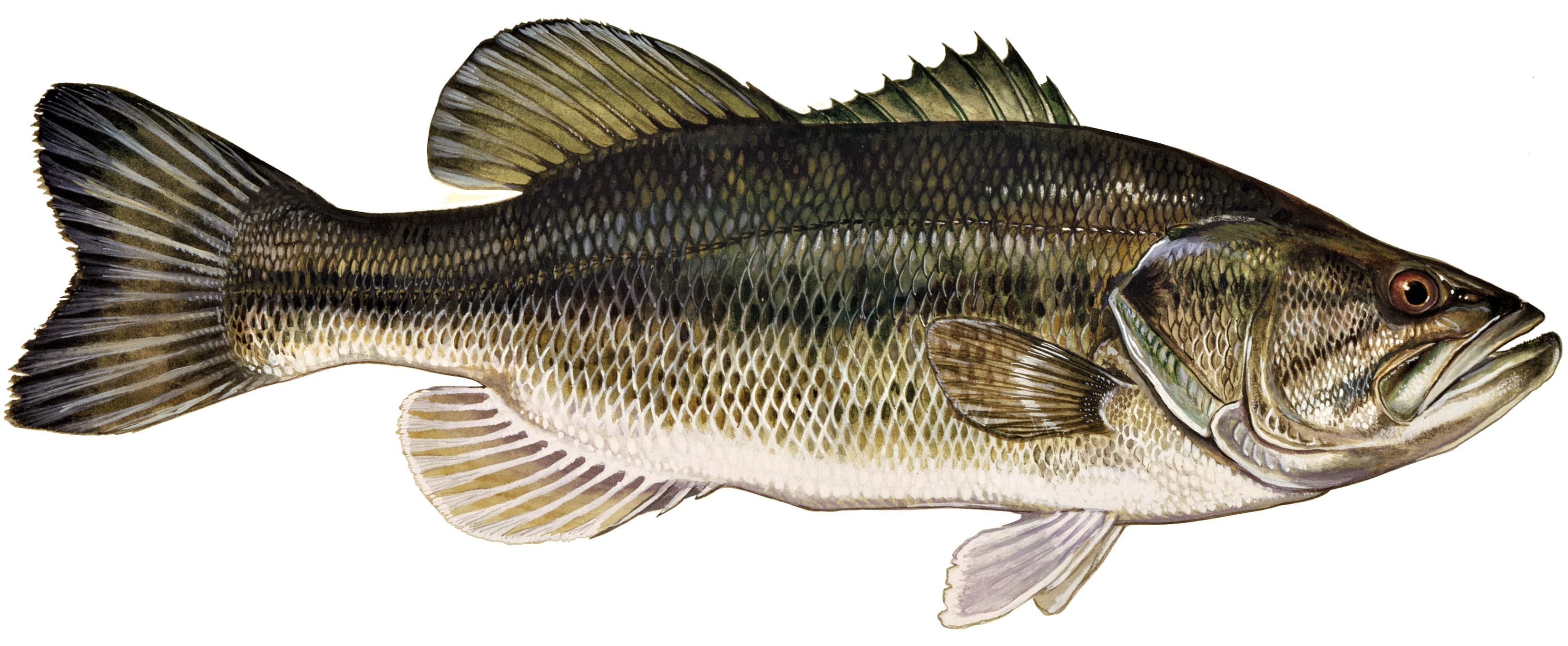
Largemouth Bass
Micropterus salmoides
Overview
The largemouth bass is the most popular freshwater game fish in North America and has built an enormous following among both conventional and fly anglers. Named for its large mouth that extends past the eye when closed, the largemouth bass is an apex predator in warm-water ecosystems, feeding on everything from insects and crayfish to frogs, mice, and smaller fish. While traditionally associated with spinning and baitcasting gear, fly fishing for largemouth bass has surged in popularity, offering explosive topwater takes on poppers and gurgler patterns that rival any trout rise for excitement. Largemouth bass are found in ponds, lakes, reservoirs, and slow-moving rivers across the United States, making them one of the most accessible game fish for fly anglers. Their aggressive strikes, powerful fights, and tolerance of warm water make them an ideal species for anglers extending their fly fishing beyond cold-water trout streams.
warmwaterLeast Concern; one of the most abundant and widely managed freshwater game fish in the world, supported by extensive stocking and habitat management programs
Taxonomy
Order
Perciformes
Family
Centrarchidae
Genus
Micropterus
Species
M. salmoides
Habitat & Behavior
Warm, shallow lakes and ponds with abundant vegetation; submerged structure like docks, fallen timber, and weed edges; also slow-moving rivers and reservoirs
Native Range: Eastern and central North America from the Great Lakes south to the Gulf of Mexico and from the Atlantic coast west to Texas
Introduced Range: Every US state, southern Canada, Mexico, Central America, Europe, Africa, Asia, and Australasia; one of the most widely distributed freshwater fish on Earth
Diet
Highly opportunistic predator feeding on bluegill, shad, crayfish, frogs, mice, snakes, ducklings, and large insects; larger fish become increasingly piscivorous
Spawning
Largemouth bass spawn in spring when water temperatures reach 60-75°F, typically from March through June depending on latitude. Males construct and guard circular nest beds in shallow water, fanning the eggs to keep them clean and oxygenated. Male bass aggressively defend the nest and will strike virtually anything that approaches, including flies.
Spawning Months
Jan
Feb
Mar
Apr
May
Jun
Jul
Aug
Sep
Oct
Nov
Dec
Spawning Temperature: 60-75°F
Conservation Status
Least Concern; one of the most abundant and widely managed freshwater game fish in the world, supported by extensive stocking and habitat management programs
The Largemouth Bass is currently classified as Least Concern; one of the most abundant and widely managed freshwater game fish in the world, supported by extensive stocking and habitat management programs. Responsible catch-and-release practices help protect populations for future generations of anglers.
Fly Fishing Tips
Topwater fishing with poppers and gurglers during early morning and late evening provides the most exciting largemouth bass fly fishing. Let the fly sit motionless after landing for 5-10 seconds before beginning a slow, rhythmic pop-and-pause retrieve. Target weed edges, lily pads, docks, and fallen timber where bass ambush prey.
Tackle Recommendations
A 9-foot 7 or 8-weight rod with a bass taper line designed for turning over large, wind-resistant flies. Use 10-15 lb tippet and heavy monofilament leaders.
Distribution Map
Recommended Fly Patterns
Boogle Bug Popper #2-6
Clouser Minnow #2-6
Dahlberg Diver #1/0-4
Woolly Bugger #4-8
Gurgler #2-6
Deer Hair Mouse #2-6
Crayfish patterns #2-6
Where to Find Largemouth Bass


Rivers with Largemouth Bass


Quick Facts
- Scientific Name
- Micropterus salmoides
- Family
- warmwater
- Average Size
- 12-20 inches, 1-5 lbs
- Record Size
- 22 lbs 4 oz (Montgomery Lake, Georgia, 1932)
- Lifespan
- 10-16 years, with fish in southern latitudes growing faster but living shorter lives than northern populations
- Water Temp Range
- 50-85°F (optimal 65-80°F for active feeding)
- Native Range
- Eastern and central North America from the Great Lakes south to the Gulf of Mexico and from the Atlantic coast west to Texas
- Conservation
- Least Concern; one of the most abundant and widely managed freshwater game fish in the world, supported by extensive stocking and habitat management programs
Fun Facts
- George Perry's 1932 world record largemouth bass was caught during the Great Depression, and Perry reportedly ate the fish for dinner that same night
- Largemouth bass can detect vibrations through their lateral line from over 100 feet away, which is why topwater poppers are so effective
- Bass tournaments generate over $100 billion annually in economic activity in the United States
- Male largemouth bass do not eat while guarding their nest, surviving solely on stored energy for up to three weeks
Size Reference
Average Size
12-20 inches, 1-5 lbs
World Record
22 lbs 4 oz (Montgomery Lake, Georgia, 1932)