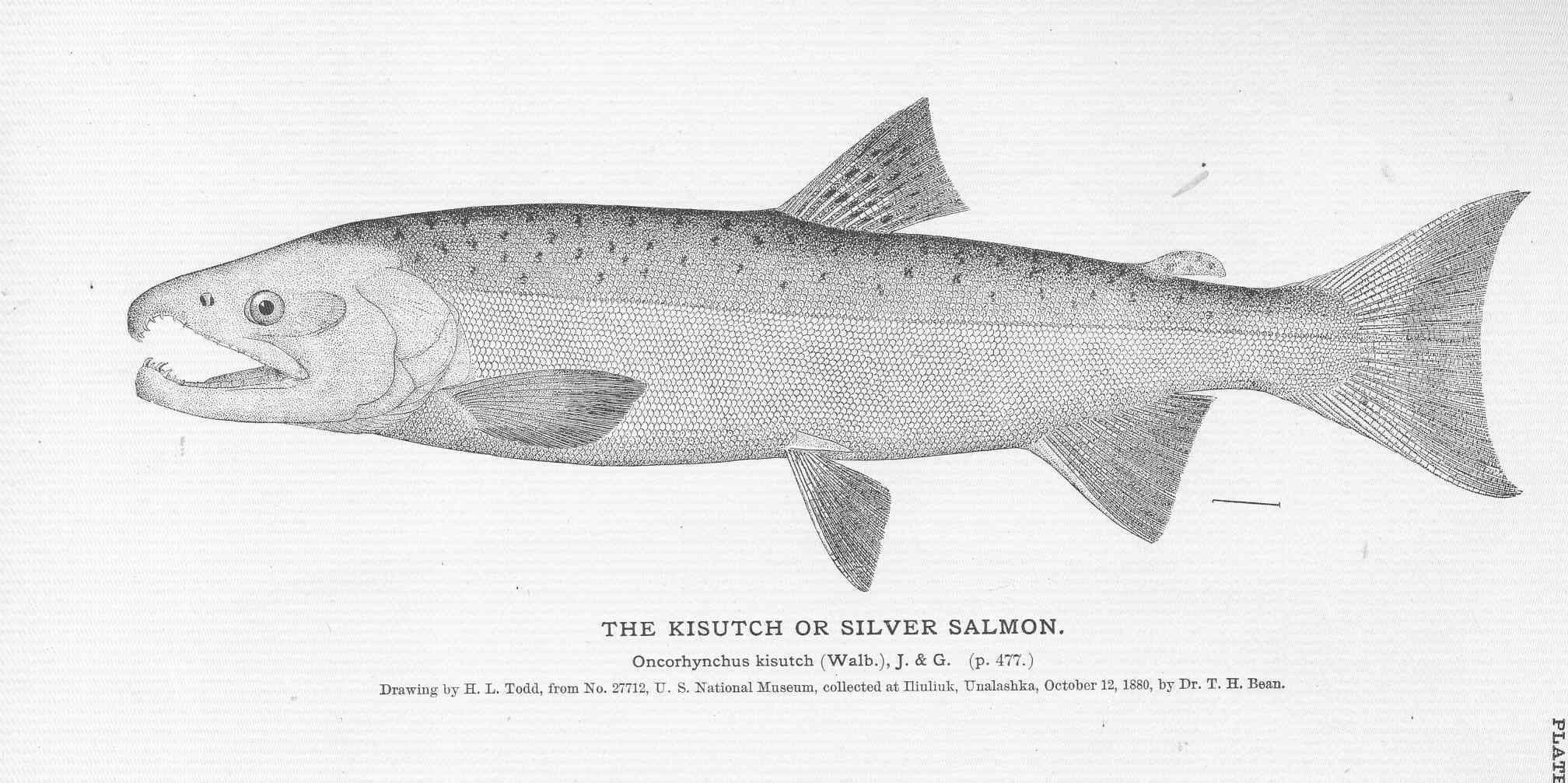
Coho Salmon
Oncorhynchus kisutch
Overview
The coho salmon, known as the silver salmon for its brilliant chrome coloring when fresh from the sea, is arguably the best Pacific salmon species for fly anglers. Coho combine aggressive fly-taking behavior with acrobatic fights and a willingness to chase down swung flies and stripped streamers that makes them the most consistently cooperative salmon on a fly rod. Averaging 8 to 12 pounds, coho provide outstanding sport on medium-weight fly tackle without requiring the heavy gear needed for Chinook. Fresh coho in their ocean-bright phase are stunning fish with metallic silver sides and dark blue-green backs. As they progress upriver, males develop hooked jaws (kypes) and dark red coloring. Alaska offers the finest coho fishing in the world, with rivers like the Kanektok, Karluk, and countless Bristol Bay tributaries providing reliable runs from July through October.
salmonLower 48 populations in Oregon and California include ESA-listed Threatened populations; Alaska populations remain healthy and are commercially harvested
Taxonomy
Order
Salmoniformes
Family
Salmonidae
Genus
Oncorhynchus
Species
O. kisutch
Habitat & Behavior
Open ocean during marine phase; coastal rivers and streams with moderate flows, deep pools, and gravel bars during spawning runs
Native Range: Pacific Rim from central California to Point Hope, Alaska, and across to Kamchatka, Russia, and northern Japan
Introduced Range: Great Lakes of North America, Chile, Argentina, and scattered introductions in other regions
Diet
In the ocean: herring, sand lance, anchovy, squid, and euphausiids; in freshwater: largely non-feeding but aggressively strike bright, flashy flies
Spawning
Coho salmon return to natal streams from September through December, with peak spawning occurring in November and December in most systems. Females construct redds in gravel riffles and deposit 1,500 to 4,500 eggs. Like all Pacific salmon, coho are semelparous, dying after a single spawning event.
Spawning Months
Jan
Feb
Mar
Apr
May
Jun
Jul
Aug
Sep
Oct
Nov
Dec
Spawning Temperature: 42-50°F
Conservation Status
Lower 48 populations in Oregon and California include ESA-listed Threatened populations; Alaska populations remain healthy and are commercially harvested
The Coho Salmon is currently classified as Lower 48 populations in Oregon and California include ESA-listed Threatened populations; Alaska populations remain healthy and are commercially harvested. Responsible catch-and-release practices help protect populations for future generations of anglers.
Fly Fishing Tips
Coho salmon respond aggressively to swung wet flies and stripped streamers, especially brightly colored patterns in pink, purple, and chartreuse. Fish the swinging fly across and down through holding water, and be prepared for explosive takes. Fresh, ocean-bright fish in the lower river reaches provide the best sport.
Tackle Recommendations
A 9-foot 7 or 8-weight rod is ideal for most coho situations. Use a floating or intermediate sinking line for shallow rivers and a sink-tip for deeper water. Tippet strength of 10-15 lb is sufficient.
Distribution Map
Recommended Fly Patterns
Egg-Sucking Leech #2-6
Clouser Minnow #2-6
Polar Shrimp #4-8
Woolly Bugger #2-6
Purple Egg-Sucking Leech #2-4
Flash Fly #2-6
Popsicle #2-4
Where to Find Coho Salmon


Rivers with Coho Salmon


Quick Facts
- Scientific Name
- Oncorhynchus kisutch
- Family
- salmon
- Average Size
- 20-28 inches, 6-12 lbs
- Record Size
- 33 lbs 4 oz (Salmon River, New York, 1989)
- Lifespan
- 3 years on average, with most spending 1.5 years in freshwater and 1.5 years in the ocean
- Water Temp Range
- 40-58°F (optimal 45-54°F)
- Native Range
- Pacific Rim from central California to Point Hope, Alaska, and across to Kamchatka, Russia, and northern Japan
- Conservation
- Lower 48 populations in Oregon and California include ESA-listed Threatened populations; Alaska populations remain healthy and are commercially harvested
Fun Facts
- Coho salmon are famous for their acrobatic jumps when hooked, often clearing the water by several feet
- Young coho spend one to two years in freshwater before migrating to sea, much longer than most other Pacific salmon species
- Male coho that return to spawn at a smaller size are called jacks, and they use a sneaker mating strategy to access females
- The coho's willingness to aggressively chase stripped flies makes it the most popular Pacific salmon species among fly anglers
Where to Find
Size Reference
Average Size
20-28 inches, 6-12 lbs
World Record
33 lbs 4 oz (Salmon River, New York, 1989)