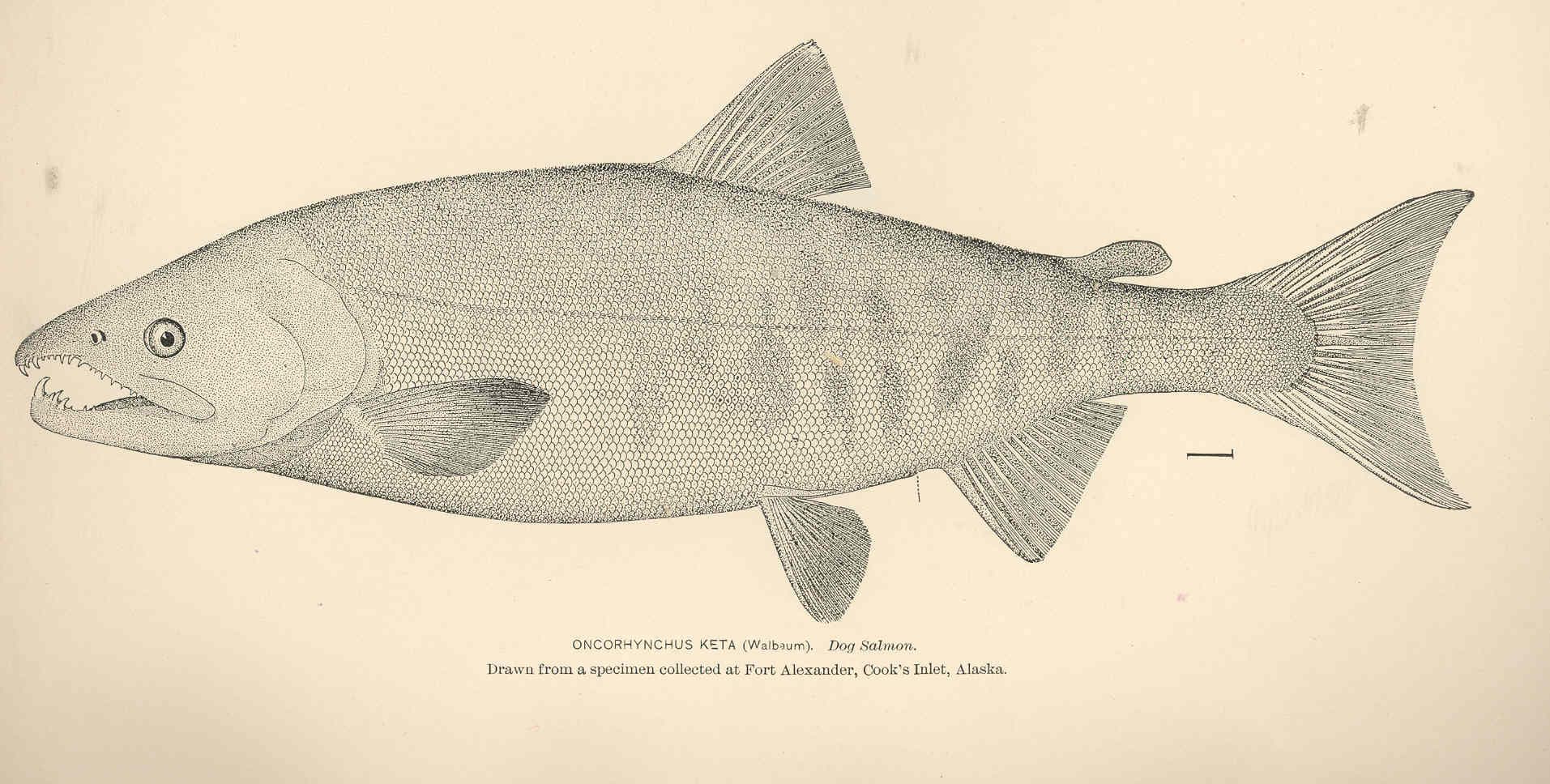
Chum Salmon
Oncorhynchus keta
Overview
The chum salmon is one of the most underappreciated game fish in the Pacific salmon family, yet it offers some of the hardest-fighting action available to fly anglers in Alaska and the Pacific Northwest. Known as dog salmon for the large canine-like teeth that males develop during spawning, chum salmon are the second-largest Pacific salmon species, averaging 8 to 15 pounds and occasionally exceeding 30 pounds. Fresh from the ocean, chum salmon are bright chrome with subtle purple and green vertical bars that intensify dramatically as fish enter spawning condition. Chum salmon have gained increasing popularity among fly anglers who appreciate their aggressive strikes, powerful runs, and availability in large numbers across a wide geographic range. Late-season chum runs in October and November extend the salmon fishing calendar well after other species have finished spawning.
salmonColumbia River chum are listed as Threatened under the ESA; Alaskan populations remain healthy with strong commercial harvests
Taxonomy
Order
Salmoniformes
Family
Salmonidae
Genus
Oncorhynchus
Species
O. keta
Habitat & Behavior
Open ocean during marine phase; coastal rivers, tidal estuaries, and small streams during spawning migration; prefers moderate currents and gravel substrates
Native Range: Widest geographic range of any Pacific salmon, from San Francisco Bay north through Alaska and across to Korea, Japan, and Arctic Russia
Introduced Range: No significant introductions outside native range; occasional stray fish appear in non-native waters
Diet
In the ocean: zooplankton, jellyfish, small fish, and squid; in freshwater during spawning: non-feeding but will aggressively strike bright, flashy patterns
Spawning
Chum salmon typically spawn from September through January, making them the latest-running Pacific salmon species in many systems. They favor lower river reaches and small coastal streams with spring-fed groundwater upwelling. Females deposit 2,400 to 3,100 eggs in gravel redds, and all adults die after spawning.
Spawning Months
Jan
Feb
Mar
Apr
May
Jun
Jul
Aug
Sep
Oct
Nov
Dec
Spawning Temperature: 42-50°F
Conservation Status
Columbia River chum are listed as Threatened under the ESA; Alaskan populations remain healthy with strong commercial harvests
The Chum Salmon is currently classified as Columbia River chum are listed as Threatened under the ESA; Alaskan populations remain healthy with strong commercial harvests. Responsible catch-and-release practices help protect populations for future generations of anglers.
Fly Fishing Tips
Target fresh chum salmon in tidewater and lower river sections where they are still bright and aggressive. Chartreuse, pink, and purple flies provoke the most strikes. Chum salmon fight exceptionally hard for their size, so be prepared for powerful runs and dogged resistance near the end of the fight.
Tackle Recommendations
A 9-foot 8-weight rod is standard for chum salmon. Use a floating or sink-tip line with 12-16 lb tippet. Heavy chum on light gear can be an endurance contest.
Distribution Map
Recommended Fly Patterns
Egg-Sucking Leech #2-6
Chartreuse Flash Fly #4-8
Woolly Bugger #2-6
Pink Marabou #4-6
Comet #4-8
Glo Bug #6-10
Purple Egg-Sucking Leech #2-4
Where to Find Chum Salmon


Rivers with Chum Salmon


Quick Facts
- Scientific Name
- Oncorhynchus keta
- Family
- salmon
- Average Size
- 22-30 inches, 8-15 lbs
- Record Size
- 35 lbs (Edie Pass, British Columbia, 1995)
- Lifespan
- 3-6 years, with most spending 2-4 years in the ocean before returning to spawn
- Water Temp Range
- 40-56°F (optimal 44-52°F)
- Native Range
- Widest geographic range of any Pacific salmon, from San Francisco Bay north through Alaska and across to Korea, Japan, and Arctic Russia
- Conservation
- Columbia River chum are listed as Threatened under the ESA; Alaskan populations remain healthy with strong commercial harvests
Fun Facts
- Chum salmon have the widest natural geographic distribution of any Pacific salmon species, spanning from California to Korea
- Male chum develop dramatic vertical bars of purple, green, and red during spawning, among the most vivid colors in any salmonid
- Chum salmon fry migrate to the ocean within weeks of emerging from the gravel, spending almost no time in freshwater
- The name dog salmon comes from the fearsome canine-like teeth males develop during spawning season
Size Reference
Average Size
22-30 inches, 8-15 lbs
World Record
35 lbs (Edie Pass, British Columbia, 1995)