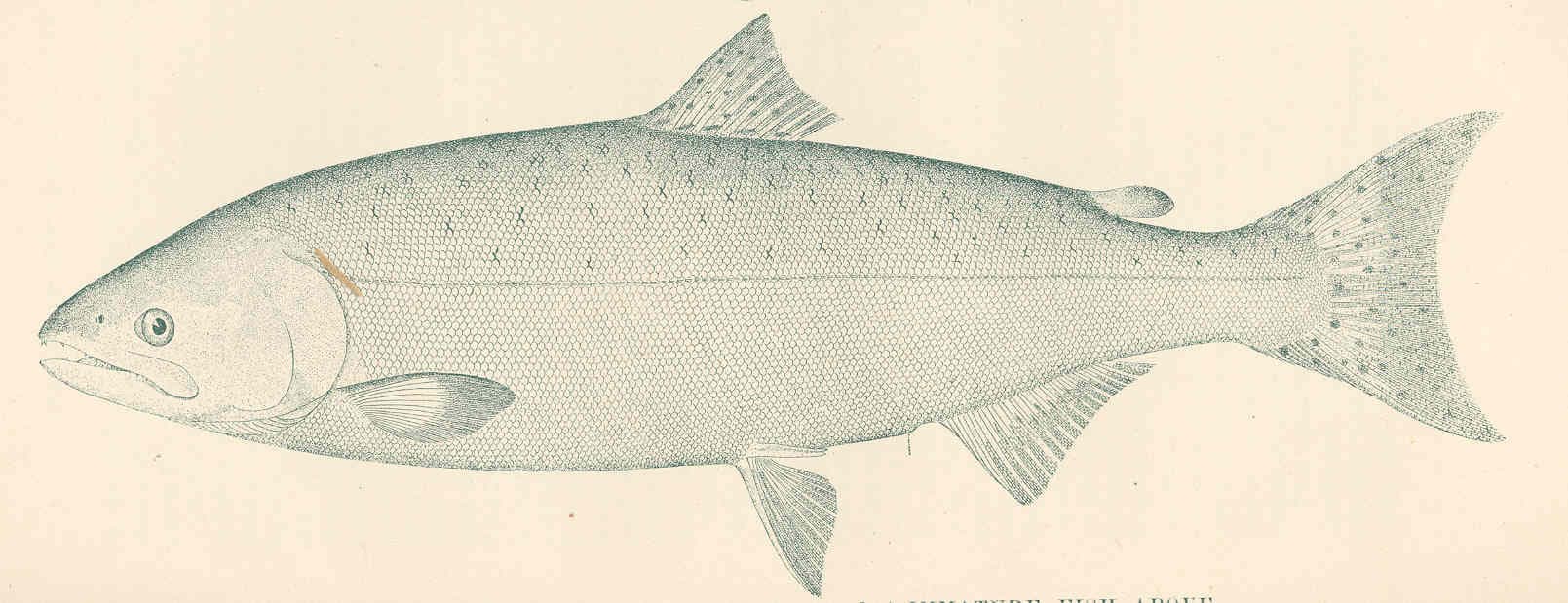
Chinook Salmon
Oncorhynchus tshawytscha
Overview
The Chinook salmon, also known as the king salmon, is the largest of all Pacific salmon species and one of the most powerful fish an angler can hook on a fly rod. Native to the Pacific coast from California to Alaska and across to Siberia, Chinook salmon can exceed 50 pounds and are capable of sustained, drag-screaming runs that test both angler and equipment. Their life cycle is one of nature's great dramas, as adults return from the ocean to their natal rivers, often traveling hundreds of miles upstream, to spawn and die. Fly fishing for Chinook salmon on their spawning runs offers an extraordinary combination of raw power and scenic beauty, whether swinging flies on Alaskan rivers or drifting beads and egg patterns in Pacific Northwest tributaries. King salmon hold deep cultural and ecological significance throughout their range.
salmonMultiple populations listed as Threatened or Endangered under the ESA; Sacramento River winter-run Chinook are Endangered; robust populations remain in Alaska and British Columbia
Taxonomy
Order
Salmoniformes
Family
Salmonidae
Genus
Oncorhynchus
Species
O. tshawytscha
Habitat & Behavior
Open ocean during feeding phase; large coastal rivers with deep pools, gravel bars, and strong currents during spawning migration
Native Range: Pacific Ocean and associated river systems from central California north to the Yukon River in Alaska and across to Kamchatka, Russia
Introduced Range: Great Lakes of North America, Patagonia (Argentina and Chile), and New Zealand
Diet
In the ocean: herring, anchovies, sardines, squid, and shrimp; in freshwater during spawning migration: largely non-feeding, but will take flies out of territorial aggression
Spawning
Chinook salmon return to their natal rivers from late spring through fall depending on the run type. They construct large redds in deep gravel, and females deposit 3,000 to 14,000 eggs. All Chinook die after spawning, their decaying bodies providing essential marine-derived nutrients to freshwater ecosystems.
Spawning Months
Jan
Feb
Mar
Apr
May
Jun
Jul
Aug
Sep
Oct
Nov
Dec
Spawning Temperature: 45-55°F
Conservation Status
Multiple populations listed as Threatened or Endangered under the ESA; Sacramento River winter-run Chinook are Endangered; robust populations remain in Alaska and British Columbia
The Chinook Salmon is currently classified as Multiple populations listed as Threatened or Endangered under the ESA; Sacramento River winter-run Chinook are Endangered; robust populations remain in Alaska and British Columbia. Responsible catch-and-release practices help protect populations for future generations of anglers.
Fly Fishing Tips
Target Chinook salmon by swinging large, heavy flies through deep runs and tailouts on a sinking line. In Alaska, dead-drifting egg patterns behind actively spawning fish can be highly effective. Focus on the deepest slots in the river where fish rest during their upstream migration.
Tackle Recommendations
A 9 to 10-foot 8 to 10-weight rod with a strong fighting butt is essential. Use heavy sinking-tip lines and 15-20 lb tippet to handle these powerful fish.
Distribution Map
Recommended Fly Patterns
Egg-Sucking Leech #2-6
Flesh Fly #4-6
Intruder #1/0-4
Woolly Bugger #2-6
Glo Bug #6-10
Bunny Leech #1/0-4
Alaska Mary Ann #4-8
Where to Find Chinook Salmon


Rivers with Chinook Salmon


Quick Facts
- Scientific Name
- Oncorhynchus tshawytscha
- Family
- salmon
- Average Size
- 24-36 inches, 10-30 lbs
- Record Size
- 97 lbs 4 oz (Kenai River, Alaska, 1985)
- Lifespan
- 3-7 years, with most spending 1-5 years in the ocean before returning to spawn
- Water Temp Range
- 38-58°F (optimal 45-55°F for spawning rivers)
- Native Range
- Pacific Ocean and associated river systems from central California north to the Yukon River in Alaska and across to Kamchatka, Russia
- Conservation
- Multiple populations listed as Threatened or Endangered under the ESA; Sacramento River winter-run Chinook are Endangered; robust populations remain in Alaska and British Columbia
Fun Facts
- The largest Chinook salmon ever documented was a 126-pound fish caught in a commercial fish trap near Petersburg, Alaska in 1949
- Chinook salmon can navigate back to within a few hundred feet of where they were born using the Earth's magnetic field and olfactory cues
- A single female Chinook can deposit up to 14,000 eggs in her redd
- Chinook salmon are a critical food source for orcas, bears, eagles, and over 130 other wildlife species
Where to Find
Size Reference
Average Size
24-36 inches, 10-30 lbs
World Record
97 lbs 4 oz (Kenai River, Alaska, 1985)