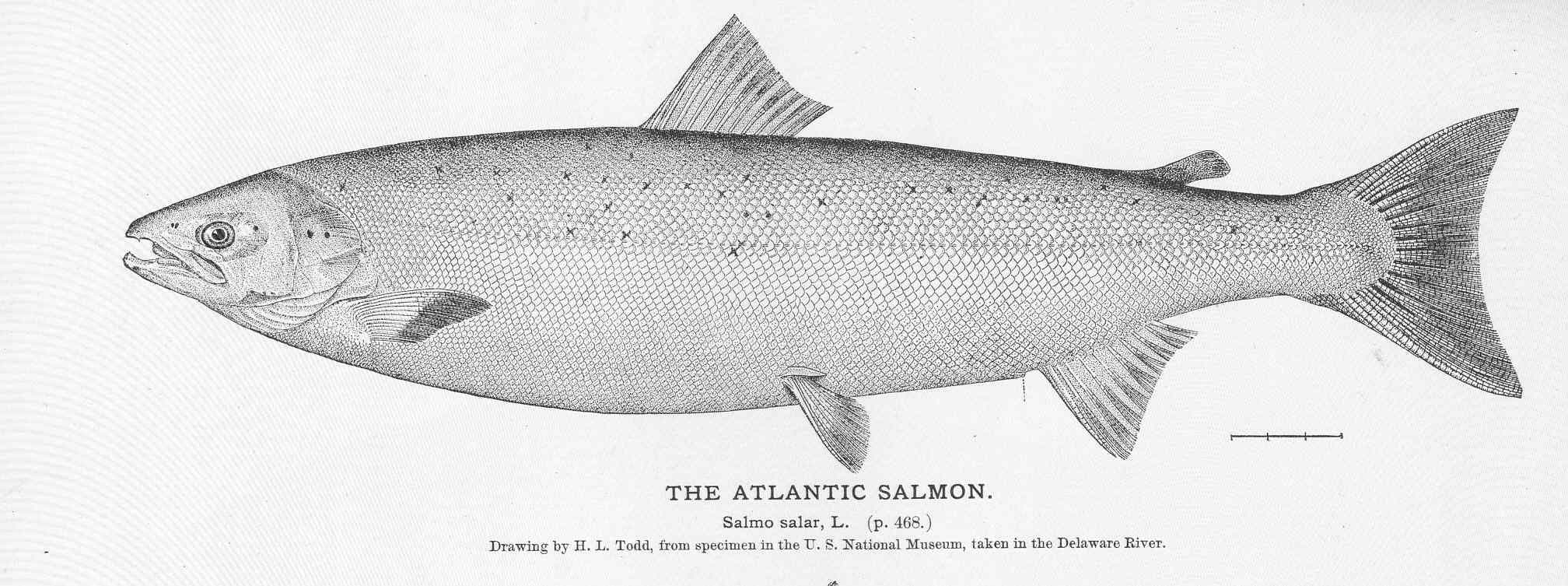
Atlantic Salmon
Salmo salar
Overview
The Atlantic salmon is the original salmon of the fly fishing world and has been pursued with flies for centuries in the rivers of the British Isles, Scandinavia, and eastern North America. Often called the king of fish, the Atlantic salmon is a supremely powerful and acrobatic game fish that can exceed 40 pounds in the largest river systems. Unlike Pacific salmon, Atlantic salmon are iteroparous and can survive spawning to return to the ocean and spawn again in subsequent years. Fly fishing for Atlantic salmon is steeped in tradition and pageantry, with classic wet fly patterns like the Jock Scott, Thunder and Lightning, and Green Highlander still in use today alongside modern tube flies and bombers. The rivers of Iceland, Scotland, Norway, Russia's Kola Peninsula, and eastern Canada's Maritime provinces offer the finest Atlantic salmon fly fishing in the world, each with distinct character and fishing culture.
salmonEndangered in the US under the ESA (Gulf of Maine DPS); populations declining across much of the range due to aquaculture impacts, habitat loss, and marine survival issues
Taxonomy
Order
Salmoniformes
Family
Salmonidae
Genus
Salmo
Species
S. salar
Habitat & Behavior
Open North Atlantic during ocean feeding phase; clean, cold rivers with cobble and gravel substrates, deep holding pools, and well-oxygenated runs during spawning migration
Native Range: North Atlantic Ocean and its tributary rivers, from Connecticut and Quebec south of Greenland, across to Iceland, the British Isles, Scandinavia, and the Baltic
Introduced Range: Patagonia (Argentina and Chile), New Zealand, and various Pacific coast rivers (mostly unsuccessful establishment)
Diet
In the ocean: capelin, sand lance, herring, shrimp, and squid; in freshwater during spawning: non-feeding, but legendary for striking traditional wet flies and dry flies out of instinct and aggression
Spawning
Atlantic salmon enter rivers from spring through fall and spawn in late October through December. Females construct redds in gravel substrates in the tails of pools and glides. Unlike Pacific salmon, many Atlantic salmon survive spawning (called kelts) and return to the ocean to feed and potentially spawn again.
Spawning Months
Jan
Feb
Mar
Apr
May
Jun
Jul
Aug
Sep
Oct
Nov
Dec
Spawning Temperature: 40-48°F
Conservation Status
Endangered in the US under the ESA (Gulf of Maine DPS); populations declining across much of the range due to aquaculture impacts, habitat loss, and marine survival issues
The Atlantic Salmon is currently classified as Endangered in the US under the ESA (Gulf of Maine DPS); populations declining across much of the range due to aquaculture impacts, habitat loss, and marine survival issues. Responsible catch-and-release practices help protect populations for future generations of anglers.
Fly Fishing Tips
Atlantic salmon fishing demands patience and precise presentation. Classic wet fly swinging on a floating or intermediate line is the traditional approach, working methodically through known holding lies. Dry fly fishing with bombers and waking flies is thrilling when conditions are right. Water temperature and height are critical factors in determining which fly size and technique to use.
Tackle Recommendations
A 12 to 14-foot 8 or 9-weight spey rod for larger rivers, or a 9-foot 7 or 8-weight single-hand rod for smaller streams. Use floating or intermediate lines and 8-12 lb tippet.
Distribution Map
Recommended Fly Patterns
Bomber #2-6
Green Highlander #4-8
Ally's Shrimp #6-10
Cascade tube fly #6-10
Blue Charm #6-8
Buck Bug #4-6
Undertaker #4-8
Where to Find Atlantic Salmon


Rivers with Atlantic Salmon

Quick Facts
- Scientific Name
- Salmo salar
- Family
- salmon
- Average Size
- 24-34 inches, 8-16 lbs
- Record Size
- 79 lbs 2 oz (Tana River, Norway, 1928)
- Lifespan
- 5-13 years, with the potential for multiple spawning migrations thanks to iteroparous reproduction
- Water Temp Range
- 38-65°F (optimal 45-55°F for fishing)
- Native Range
- North Atlantic Ocean and its tributary rivers, from Connecticut and Quebec south of Greenland, across to Iceland, the British Isles, Scandinavia, and the Baltic
- Conservation
- Endangered in the US under the ESA (Gulf of Maine DPS); populations declining across much of the range due to aquaculture impacts, habitat loss, and marine survival issues
Fun Facts
- Atlantic salmon have been pursued with flies since at least the 15th century, making salmon fly fishing one of the oldest forms of recreational angling
- A single Atlantic salmon can leap waterfalls up to 12 feet high during its upstream migration
- Unlike all Pacific salmon species, Atlantic salmon can survive spawning and return to the ocean to spawn again
- The elaborate Victorian-era Atlantic salmon flies, tied with exotic feathers from around the world, are now prized by collectors and can sell for thousands of dollars each
Size Reference
Average Size
24-34 inches, 8-16 lbs
World Record
79 lbs 2 oz (Tana River, Norway, 1928)