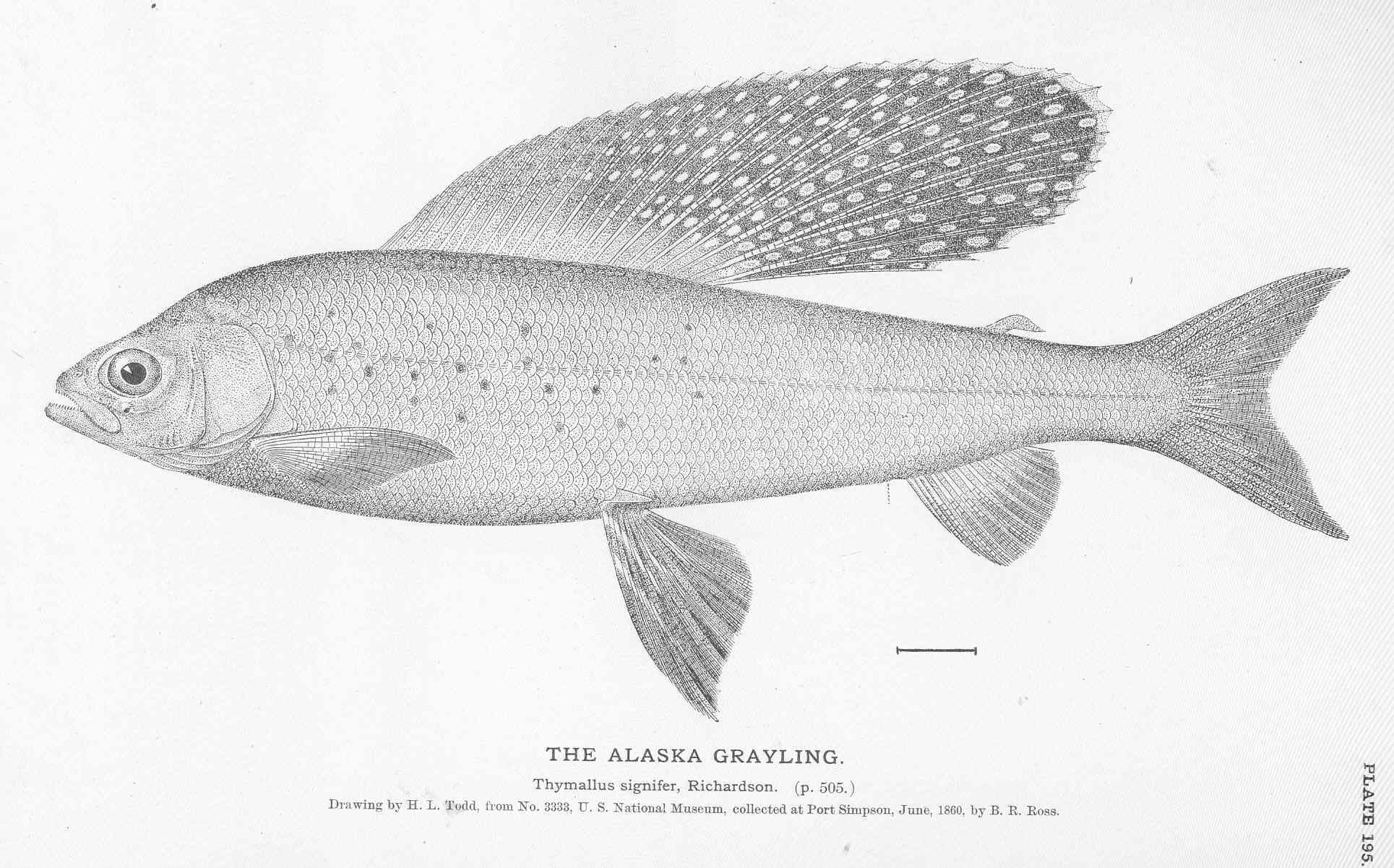
Arctic Grayling
Thymallus arcticus
Overview
The Arctic grayling is one of the most visually striking freshwater fish in North America, instantly recognizable by its enormous, sail-like dorsal fin adorned with iridescent spots of blue, purple, and pink. Once widespread across the northern half of the continent, Arctic grayling have been reduced to a fraction of their historical range in the lower 48 states, with Montana's Big Hole River supporting the last self-sustaining fluvial population in the contiguous United States. In Alaska, British Columbia, and the Canadian Arctic, grayling remain abundant and provide outstanding fly fishing opportunities. They are enthusiastic surface feeders, making them a dream species for dry fly purists, and they are found in some of the most remote and scenic waters on the planet. Their willingness to rise to a well-presented dry fly and the spectacular beauty of their dorsal fin make every grayling a memorable catch.
graylingSpecies of Special Concern in Montana; extinct in Michigan since the 1930s; abundant in Alaska and northern Canada
Taxonomy
Order
Salmoniformes
Family
Salmonidae
Genus
Thymallus
Species
T. arcticus
Habitat & Behavior
Clear, cold rivers and lakes in northern regions; gravel-bottomed pools and runs in flowing water; thrives at temperatures below 55°F
Native Range: Northern North America from Alaska through Canada; relic populations in Montana and historically Michigan; also found across Siberia and into Mongolia
Introduced Range: Limited stocking efforts in mountain lakes of the western United States to supplement declining populations
Diet
Primarily aquatic insects (mayflies, caddisflies, stoneflies, midges) and terrestrial insects; also small crustaceans and occasionally fish eggs
Spawning
Arctic grayling are spring spawners, typically reproducing from April through June as water temperatures rise after ice-out. They broadcast eggs over gravel substrates in rivers and stream mouths without constructing redds. Males display their spectacular dorsal fin during courtship to attract females.
Spawning Months
Jan
Feb
Mar
Apr
May
Jun
Jul
Aug
Sep
Oct
Nov
Dec
Spawning Temperature: 40-50°F
Conservation Status
Species of Special Concern in Montana; extinct in Michigan since the 1930s; abundant in Alaska and northern Canada
The Arctic Grayling is currently classified as Species of Special Concern in Montana; extinct in Michigan since the 1930s; abundant in Alaska and northern Canada. Responsible catch-and-release practices help protect populations for future generations of anglers.
Fly Fishing Tips
Arctic grayling are one of the most willing dry fly fish in freshwater. Small attractor patterns and insect imitations presented with a drag-free drift will consistently produce strikes. Grayling have relatively soft mouths, so use a gentle hook set and light tippet to avoid pulling the fly free.
Tackle Recommendations
A 9-foot 3 or 4-weight rod is ideal for grayling fishing. Use 4X-6X tippet and light leaders for delicate dry fly presentations.
Distribution Map
Recommended Fly Patterns
Royal Wulff #12-16
Elk Hair Caddis #14-16
Adams #14-16
Black Gnat #14-18
Parachute Adams #14-18
Griffith's Gnat #18-22
Prince Nymph #14-16
Where to Find Arctic Grayling


Rivers with Arctic Grayling


Quick Facts
- Scientific Name
- Thymallus arcticus
- Family
- grayling
- Average Size
- 10-15 inches, 0.5-1.5 lbs
- Record Size
- 5 lbs 15 oz (Katseyedie River, Northwest Territories, 1967)
- Lifespan
- 6-10 years, with fish in far northern populations occasionally reaching 15 years
- Water Temp Range
- 36-55°F (optimal 40-50°F)
- Native Range
- Northern North America from Alaska through Canada; relic populations in Montana and historically Michigan; also found across Siberia and into Mongolia
- Conservation
- Species of Special Concern in Montana; extinct in Michigan since the 1930s; abundant in Alaska and northern Canada
Fun Facts
- The grayling's enormous dorsal fin can be folded flat against its body for streamlining in strong currents and fanned out for display, thermoregulation, and stability
- Freshly caught grayling emit a faint scent of thyme, which is the origin of their genus name Thymallus
- Montana's Big Hole River hosts the last fluvial Arctic grayling population in the lower 48 states
- Grayling were once so abundant in Michigan that they were commercially harvested and shipped to restaurants in Detroit and Chicago
Where to Find
Size Reference
Average Size
10-15 inches, 0.5-1.5 lbs
World Record
5 lbs 15 oz (Katseyedie River, Northwest Territories, 1967)