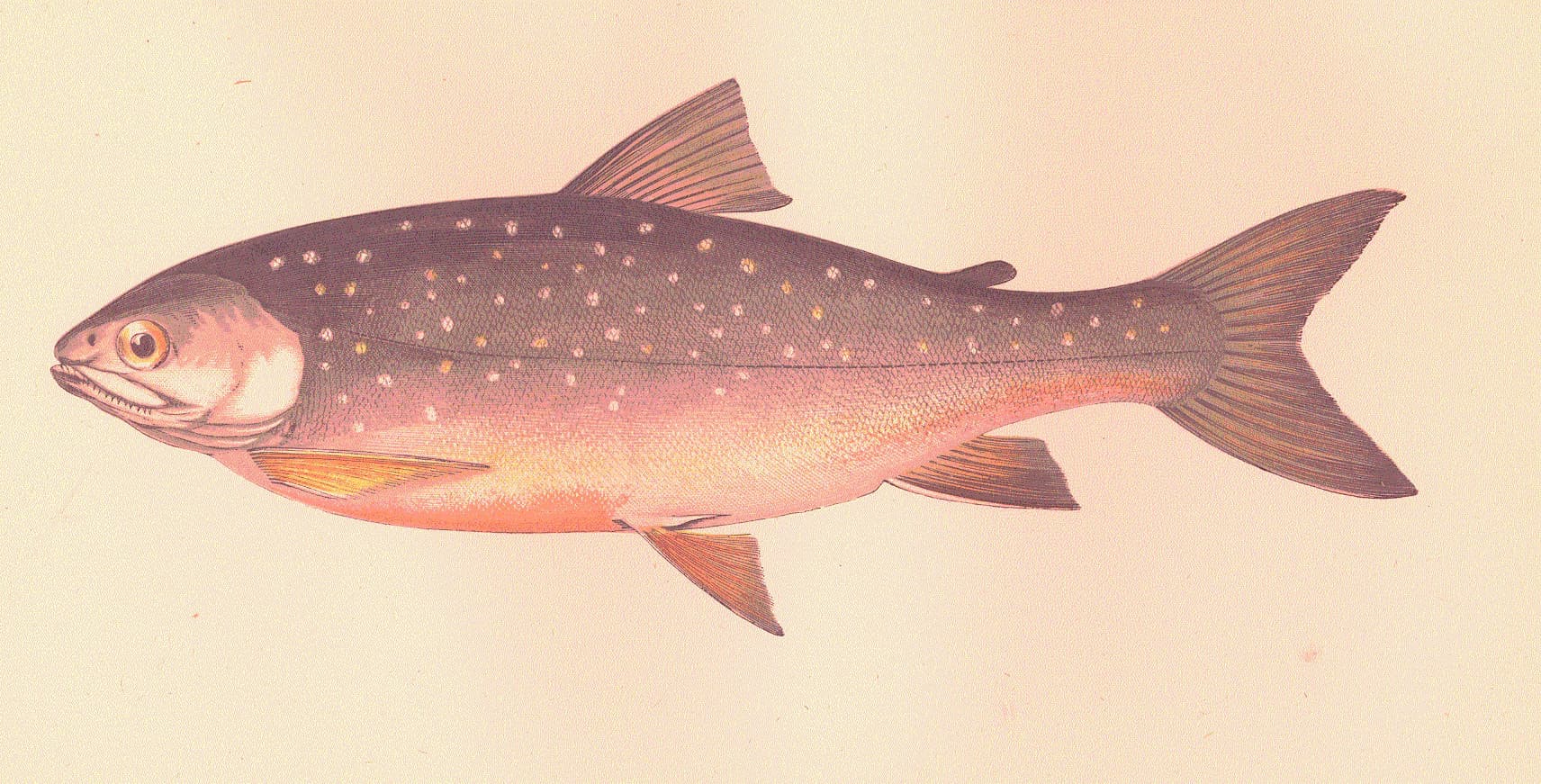
Arctic Char
Salvelinus alpinus
Overview
The Arctic char is the northernmost freshwater fish species on Earth and one of the most strikingly colored salmonids in existence. Found in lakes, rivers, and coastal waters across the circumpolar Arctic, Arctic char exhibit extraordinary variation in form, color, and life history. During spawning season, male char develop brilliant orange to deep crimson bellies, white-tipped fins, and an overall appearance that rivals any tropical fish for sheer visual impact. Arctic char are supremely adapted to cold, nutrient-poor waters where other fish species cannot survive, and they are often the only fish species present in high-Arctic lakes. Both landlocked and anadromous (sea-run) forms exist, with anadromous char migrating to coastal waters in summer to feed before returning to freshwater in fall. Fly fishing for Arctic char is a wilderness experience that takes anglers to some of the most remote and pristine landscapes remaining on the planet.
charLeast Concern (IUCN) globally; some southern relic populations in Europe are Vulnerable due to climate change and habitat degradation
Taxonomy
Order
Salmoniformes
Family
Salmonidae
Genus
Salvelinus
Species
S. alpinus
Habitat & Behavior
Deep, cold oligotrophic lakes and tundra rivers in the Arctic; coastal marine waters during summer feeding migrations for anadromous populations
Native Range: Circumpolar Arctic, including northern Canada, Alaska, Greenland, Iceland, Scandinavia, and Arctic Russia; relic populations in alpine lakes of Scotland, Ireland, and the Alps
Introduced Range: Limited introductions in mountain lakes of the western United States and southern hemisphere cold-water lakes
Diet
Aquatic invertebrates, small crustaceans, zooplankton, insect larvae, and small fish; anadromous populations feed on marine invertebrates and capelin in coastal waters
Spawning
Arctic char spawn in the fall, typically September through November, on gravel shoals in lakes or in river substrates. Some populations spawn only every other year due to the energy demands of reproduction in nutrient-poor Arctic environments. Males develop vivid spawning colors and compete aggressively for access to females.
Spawning Months
Jan
Feb
Mar
Apr
May
Jun
Jul
Aug
Sep
Oct
Nov
Dec
Spawning Temperature: 36-43°F
Conservation Status
Least Concern (IUCN) globally; some southern relic populations in Europe are Vulnerable due to climate change and habitat degradation
The Arctic Char is currently classified as Least Concern (IUCN) globally; some southern relic populations in Europe are Vulnerable due to climate change and habitat degradation. Responsible catch-and-release practices help protect populations for future generations of anglers.
Fly Fishing Tips
Sea-run Arctic char are aggressive fly takers when they first enter rivers from the ocean in late summer and fall. Use bright, flashy patterns that imitate the marine prey they have been feeding on. In lakes, focus on inlet and outlet areas where char congregate to feed on migrating insects and small fish.
Tackle Recommendations
A 9-foot 6 or 7-weight rod handles most Arctic char situations. Use sink-tip lines for river fishing and full-sinking lines for deep lakes. Tippet in the 8-12 lb range is appropriate.
Distribution Map
Recommended Fly Patterns
Egg-Sucking Leech #4-8
Woolly Bugger #4-8
Clouser Minnow #4-6
Flesh Fly #4-8
Bead Head Nymph #10-14
Glo Bug #6-10
Zonker #4-6
Where to Find Arctic Char


Rivers with Arctic Char


Quick Facts
- Scientific Name
- Salvelinus alpinus
- Family
- char
- Average Size
- 14-24 inches, 2-6 lbs
- Record Size
- 32 lbs 9 oz (Tree River, Northwest Territories, 1981)
- Lifespan
- 10-25 years, with some populations in low-productivity Arctic lakes reaching 40 years
- Water Temp Range
- 32-55°F (optimal 39-50°F)
- Native Range
- Circumpolar Arctic, including northern Canada, Alaska, Greenland, Iceland, Scandinavia, and Arctic Russia; relic populations in alpine lakes of Scotland, Ireland, and the Alps
- Conservation
- Least Concern (IUCN) globally; some southern relic populations in Europe are Vulnerable due to climate change and habitat degradation
Fun Facts
- Arctic char is the northernmost freshwater fish species on Earth, found in lakes within 600 miles of the North Pole
- Some Arctic char populations have been isolated in lakes since the last ice age, over 10,000 years ago, resulting in remarkable genetic diversity
- Char are farmed commercially in Iceland and Canada and are considered among the finest eating fish in the world
- In some lakes, multiple morphs of Arctic char coexist, each occupying a different ecological niche and differing in size, diet, and coloration
Where to Find
Size Reference
Average Size
14-24 inches, 2-6 lbs
World Record
32 lbs 9 oz (Tree River, Northwest Territories, 1981)